Where's my second installment? The short answer
- Look it up online at the Cook County Treasurer. Search by PIN or property address to view, download, and check the payment status of your current bill.
- The second installment is the bigger bill — it reflects your current assessed value, the final tax rate, and your exemptions (the first installment is just 55% of last year).
- It often arrives late. The due date is set each year after assessments and rates are finalized, and recent Cook County years have run months behind the usual summer schedule.
- Common reasons you don't have it: a mailing-address issue, your mortgage escrow received it, or the bill simply hasn't been issued yet.
- No paper bill doesn't excuse paying. A late payment accrues a 0.75% monthly charge — and if the bill looks too high, the fix is appealing your assessment.
If you're asking "where is my second installment Cook County property tax bill?" — you're far from alone. It's the larger of the county's two annual bills, it frequently shows up later than people expect, and it's the one where surprises tend to appear. Here's how to find it, why it looks the way it does, and what to do next.
01 · Find it onlineHow to find your second-installment bill
The fastest way to locate your bill — whether or not a paper copy arrived — is the Cook County Treasurer's online portal. It's the Treasurer who issues and collects bills, so that's where current bills and payment status live.[1]
Look up your bill step by step
Go to the Treasurer's official site
Visit cookcountytreasurer.com. This is the Cook County Treasurer's official portal — separate from the Assessor (who sets values) and from any private firm.
Search by PIN or property address
Enter your 14-digit Property Index Number (PIN) exactly as it appears on a prior bill or assessment notice, or use the address search if you don't have the PIN. Residential and commercial owners use the same lookup.
View, download, and check status
You can view and download the current bill, print a copy for your records, confirm whether it's been paid, and see installment due dates and any late charges.
Pay or confirm payment
Pay online for free from a bank account (e-check), or confirm a payment your mortgage lender may have already made on your behalf.
Enter the PIN exactly
PINs are formatted like 00-00-000-000-0000. A mistyped digit returns the wrong parcel or no result, so copy it precisely from a prior bill or your assessment notice. If you can't find the PIN, the address search will surface it.
02 · Why it's late or missingWhy your bill may not have arrived
If no bill has shown up, it's usually one of three things — and only one of them requires action on your part.
Why you might not have your second installment
| Reason | What it means & what to do |
|---|---|
| Mailing-address issue | Bill goes to the property address unless another is on file — update it with the Treasurer if you moved |
| Mortgage escrow | Your lender receives the bill directly; you may get no paper copy — review it online anyway for accuracy |
| Billing not yet issued | If the due date hasn't been announced, the bill likely isn't out yet — check the Treasurer periodically |
That third reason is common in Cook County. The second installment can't be calculated until assessments are finalized and every taxing district's rate is set, so the date is announced each year rather than fixed. In recent years the process has run well behind the traditional summer timeline — the second installment is targeted for around August 1 by statute, but billing delays have pushed it into late fall or even winter in some years.[2]
Not getting a bill doesn't excuse paying
You're responsible for paying on time even if a paper bill never reaches you. A late second installment accrues a 0.75% monthly charge under Illinois law. If a bill hasn't arrived near the expected due date, confirm your balance and status on the Treasurer's site rather than waiting for paper.
03 · Why it's biggerWhy the second installment is the larger bill
The two installments are calculated very differently. The first is a flat estimate; the second is the real, fully-calculated bill — which is why it's usually larger and why any change from last year shows up here.
First installment vs. second installment
| First installment | Second installment |
|---|---|
| Flat 55% of last year's total tax | Current assessed value + final rate + exemptions |
| An estimate — no current-year changes | The real, fully-calculated bill |
| Mailed late winter, due early spring | Mailed and due later — summer to fall |
| Same every year (until last year's total changes) | Where reassessments, rate changes & appeals appear |
So if your second installment jumped, the cause is one of a few things — and each points to a different response:
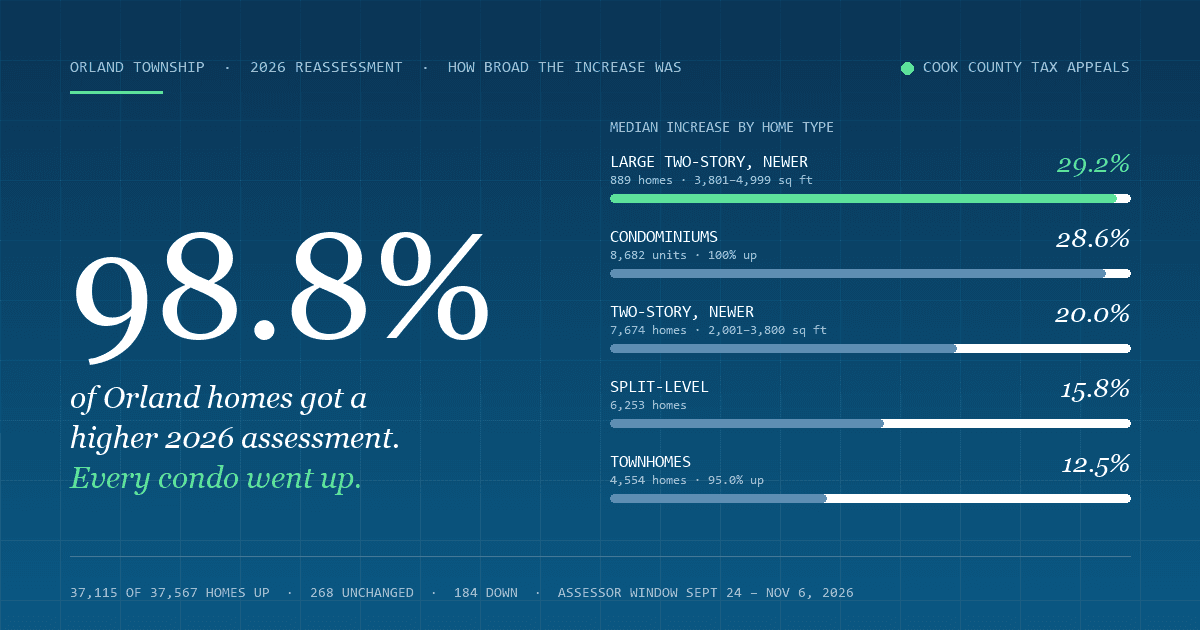
- A reassessment raised your assessed value (Cook County reassesses each township every three years).
- An exemption changed — one you had last year may be missing this year.
- Local tax rates rose because taxing districts increased their levies.
- The property changed — an addition or improvement increased the value.
Check your exemptions first
Before anything else, confirm the exemptions on the bill. A missing Homeowner or Senior exemption is a common, fixable cause of a jump — and the Assessor's Certificate of Error process can often restore it and issue an adjusted bill, sometimes for prior years.
04 · The timelineThe assessment-to-bill timeline
Understanding why the second installment looks the way it does means understanding the cycle behind it. The bill you're holding is the end of a chain that started more than a year earlier.
From reassessment to your bill
The Assessor sets your value
Each township is reassessed on a rotating three-year schedule. The Assessor mails a reassessment notice with your new proposed value.
You can appeal — within a limited window
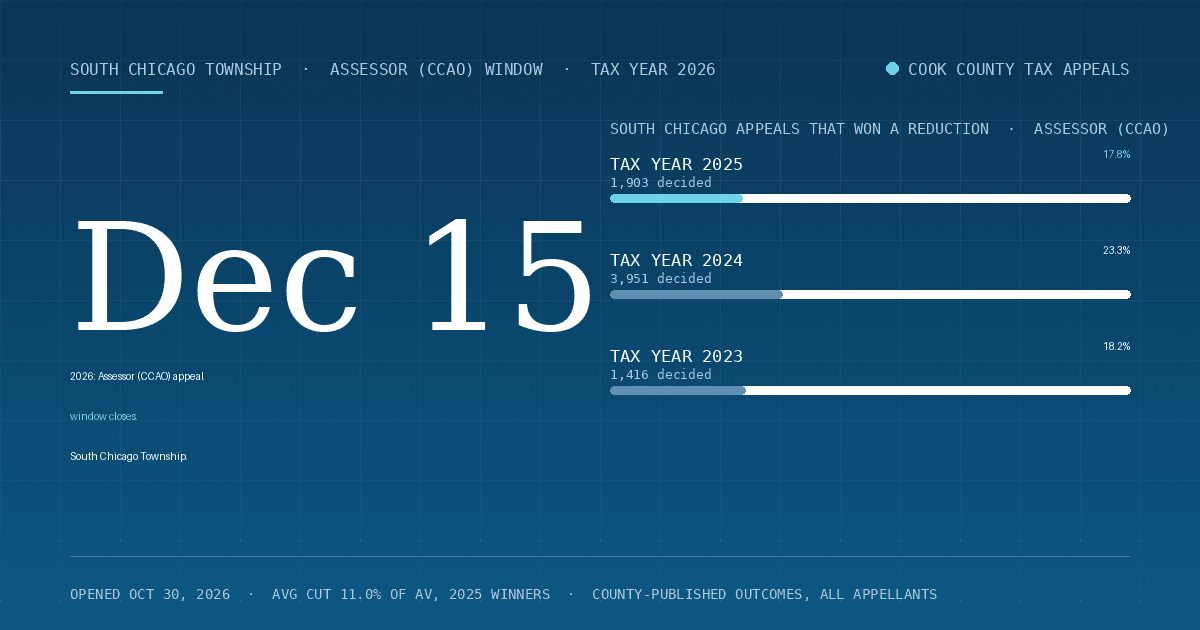
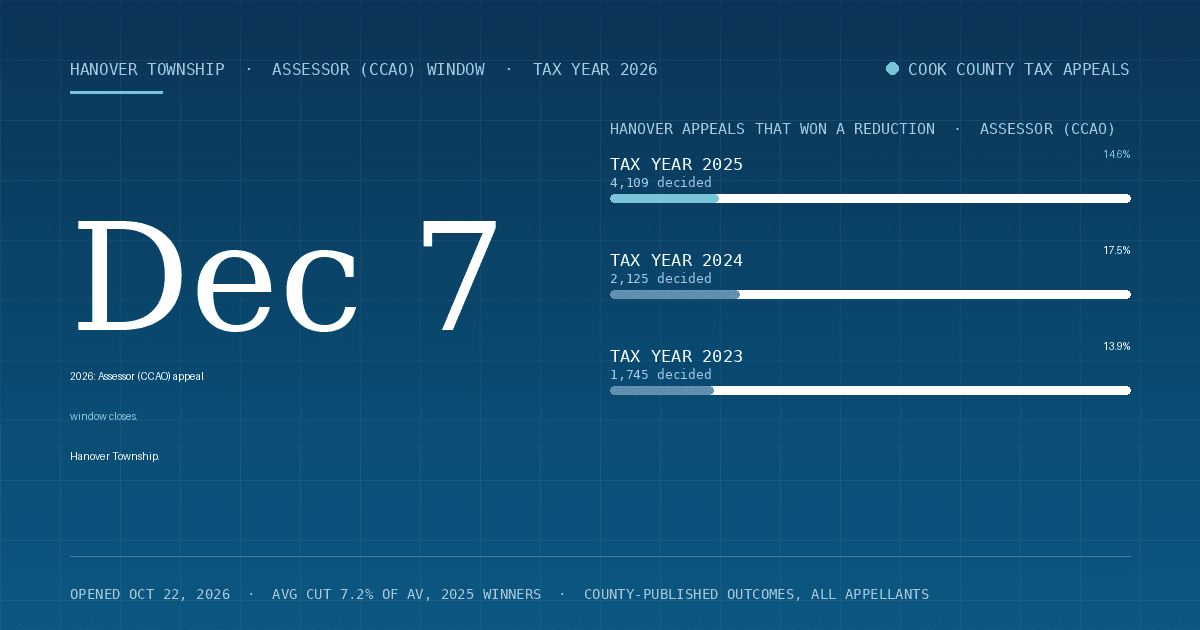
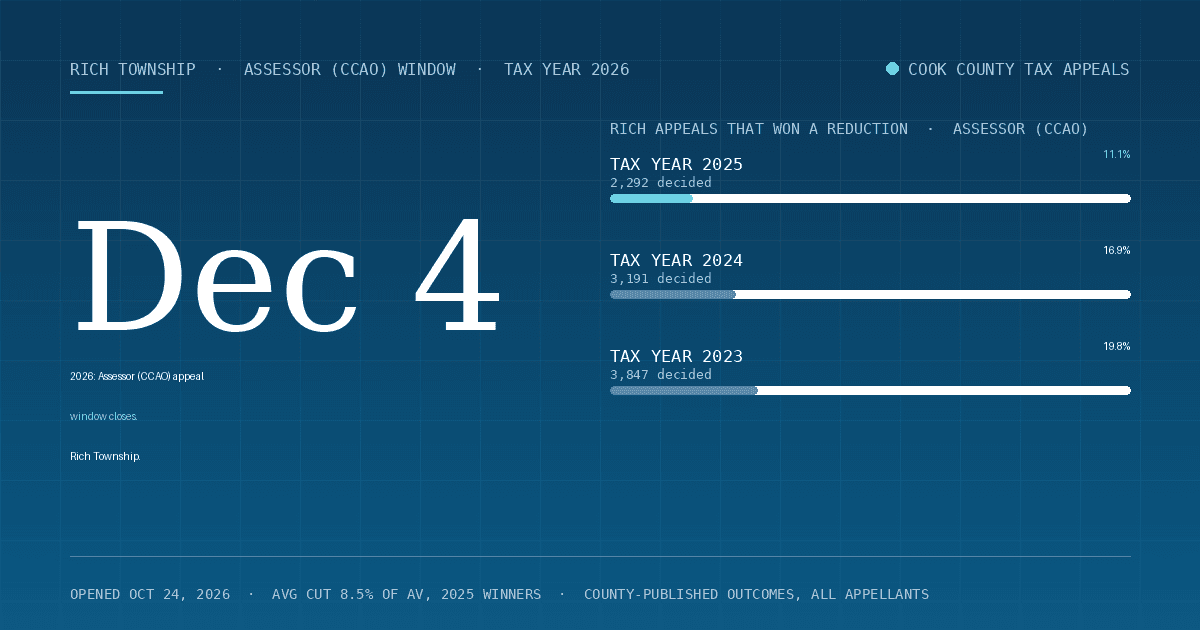
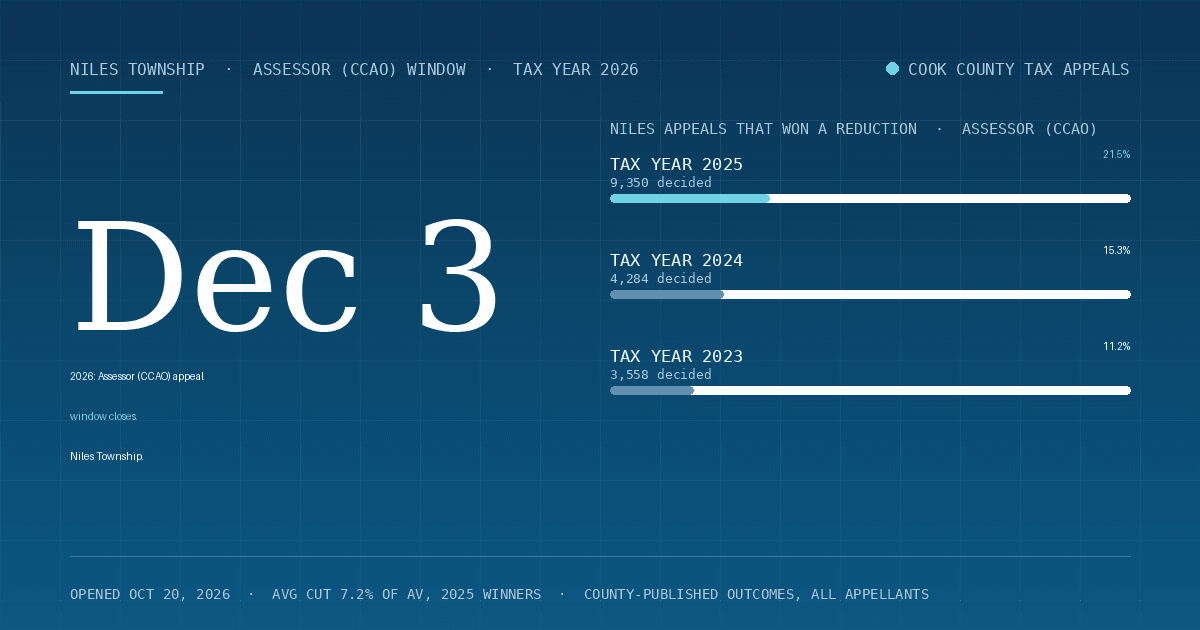
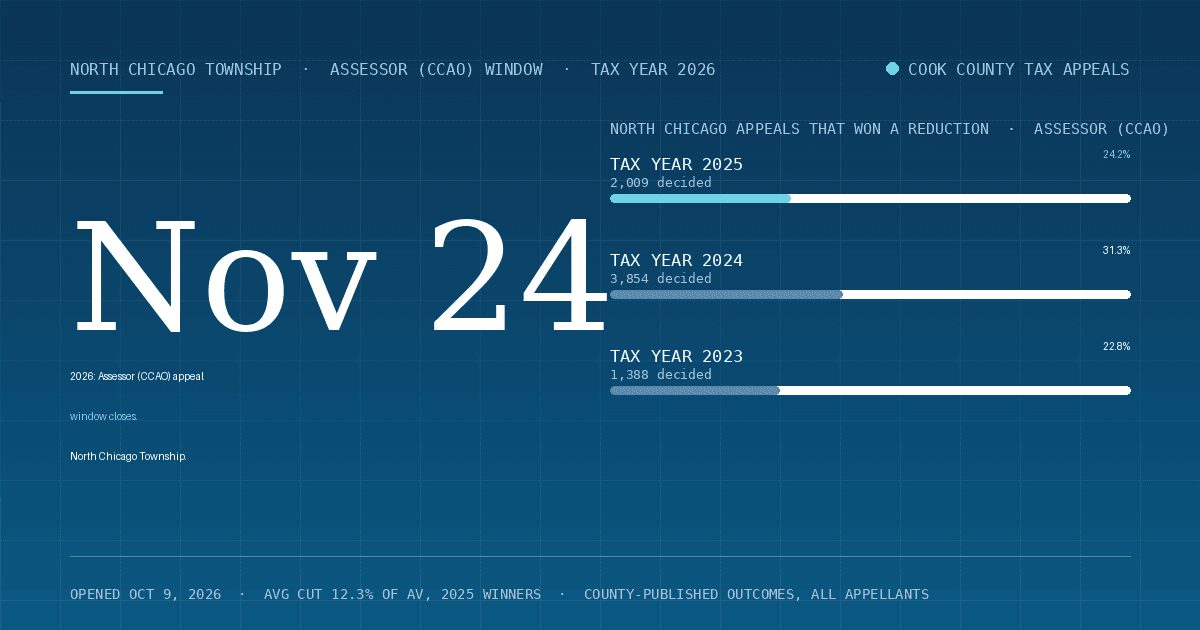
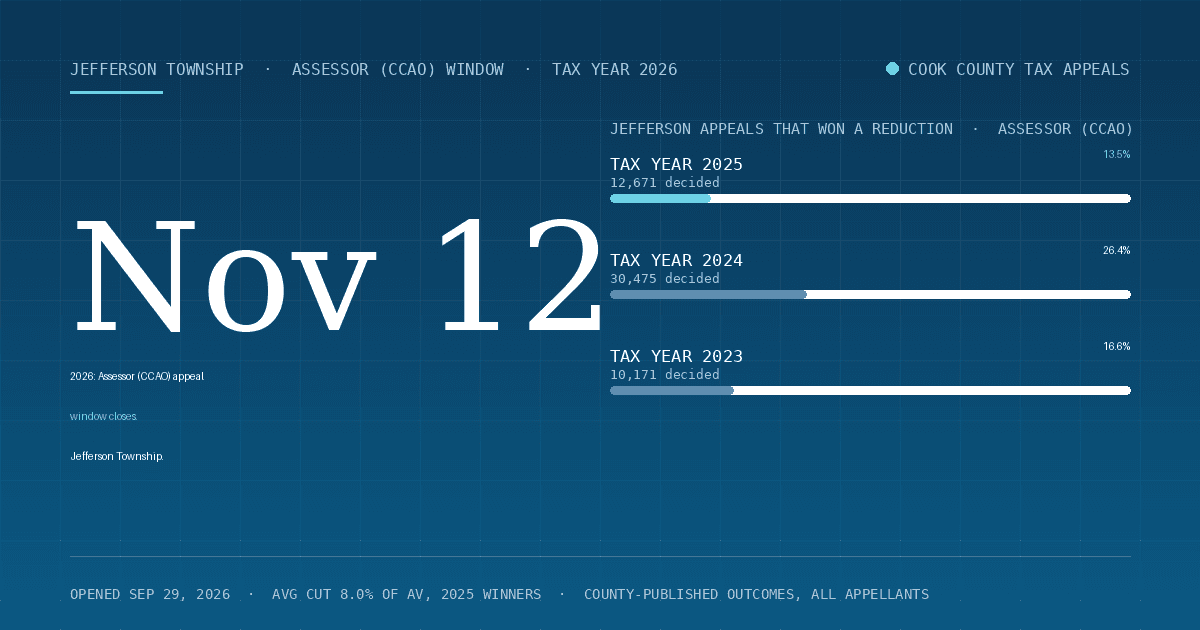
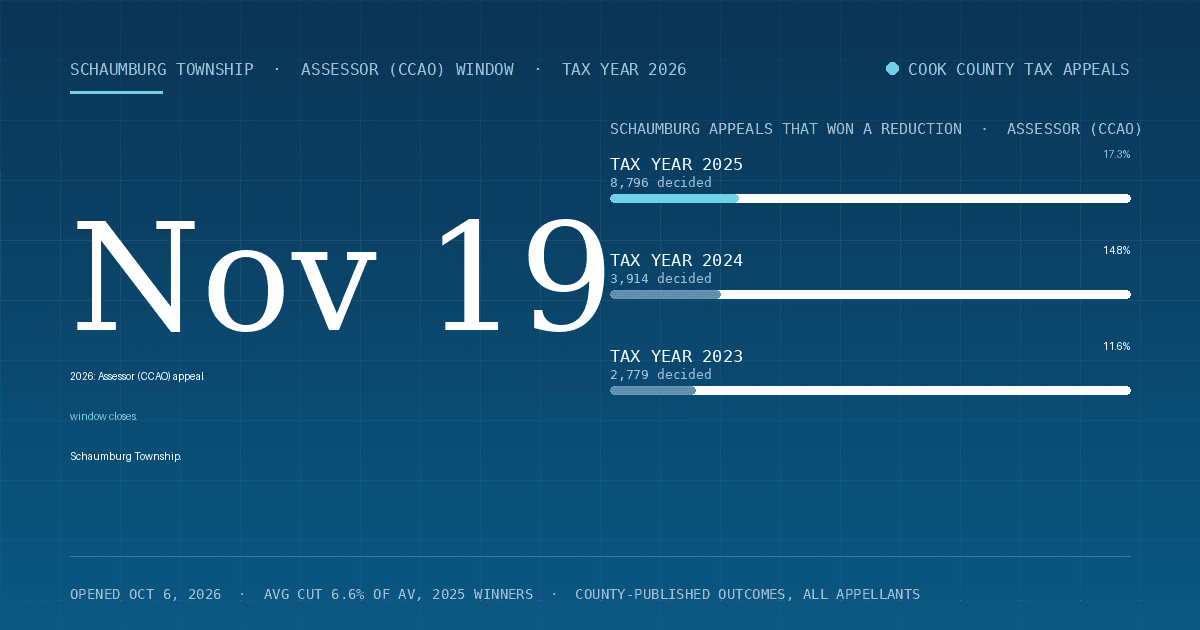
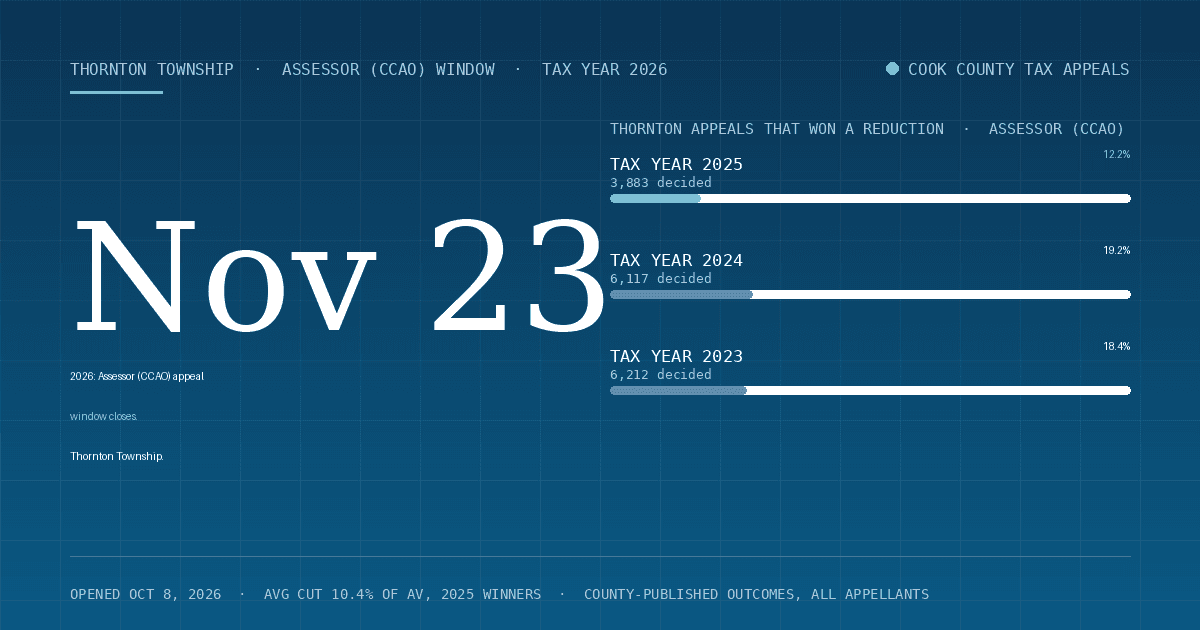
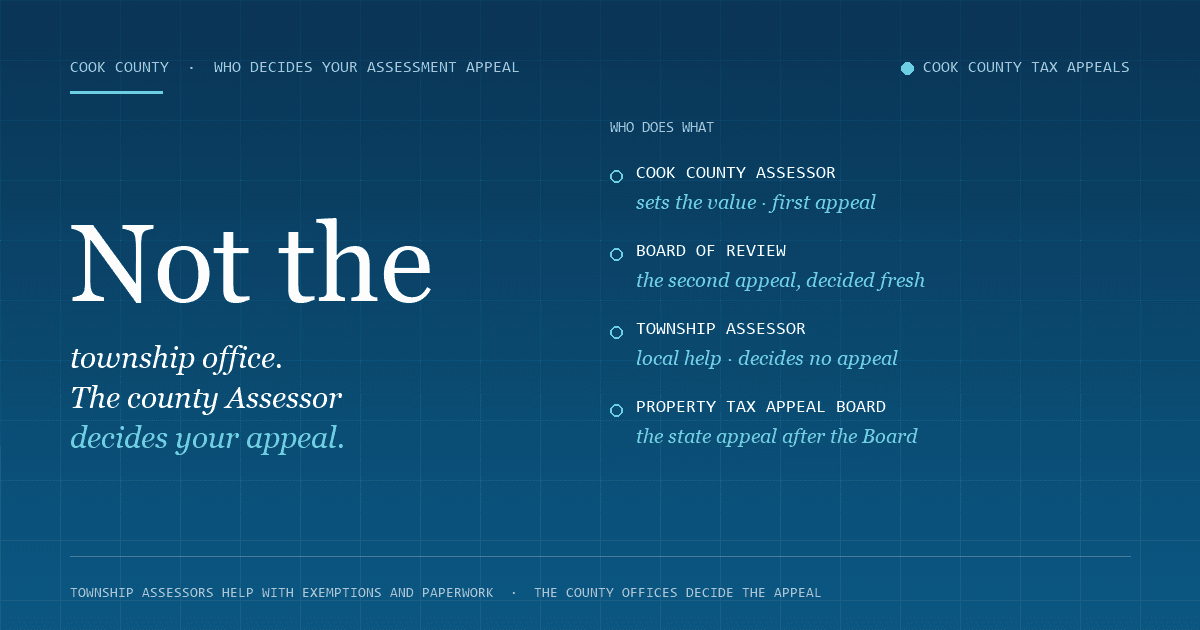
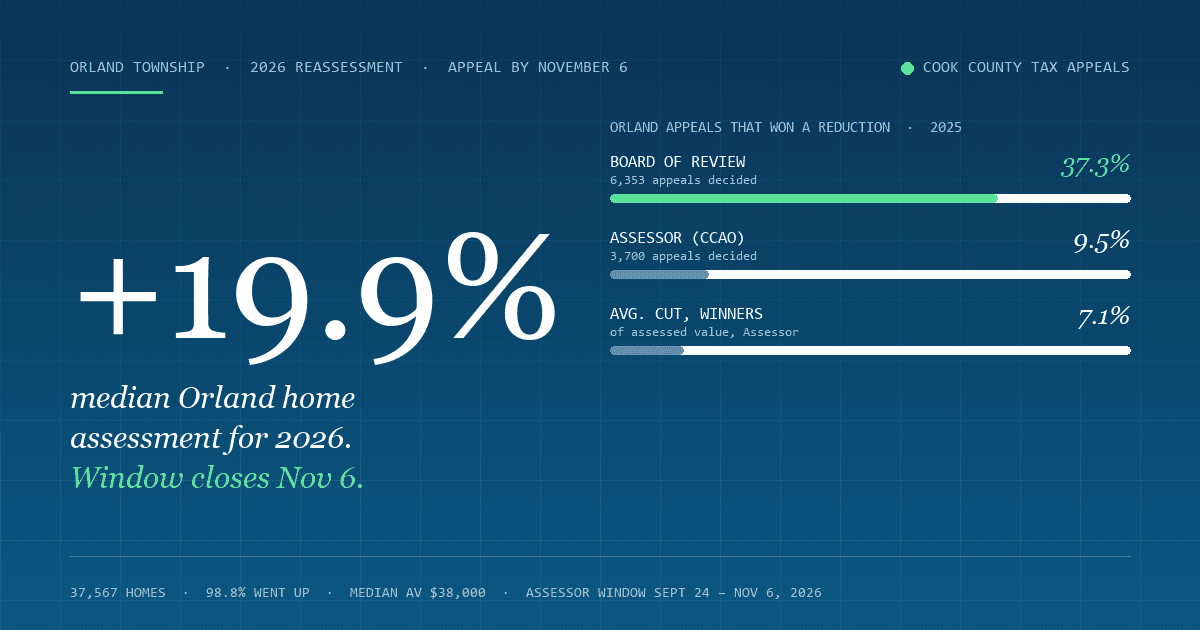
Owners have a short, township-specific window to appeal at the Assessor, and later at the Board of Review. Both residential and commercial owners have the right to appeal.
Rates and exemptions are finalized
After appeals close, taxing districts set levies, the Clerk calculates rates, and exemptions are applied — all of which feed the second installment.
The Treasurer issues the second installment
The fully-calculated bill is mailed and posted online. A successful appeal from the reassessment typically shows up on the second installment issued afterward.
The Assessor sets values and handles exemptions (cookcountyassessoril.gov); the Board of Review hears appeals; the Treasurer issues and collects bills (cookcountytreasurer.com). Knowing which office to contact saves time — bills and payment status are always the Treasurer.
05 · If it looks too highIf the bill looks too high — your options
The second installment reflects the final calculation for the year, so it's often the moment owners first notice a value that feels wrong. You can't change a bill that's already calculated — but you can attack the assessed value it was built on, and the right time is the appeal window.
Your tax bill starts with your assessed value: the Assessor sets it, exemptions are subtracted, the local rate is applied, and the result is your bill. An appeal lowers that first number — and the savings flow through to a later second installment. Residential property is assessed at 10% of market value; commercial and industrial at 25%, often using income-and-expense data, which is why commercial owners should review the methodology closely.
Second installment too high? We'll review your assessment free.
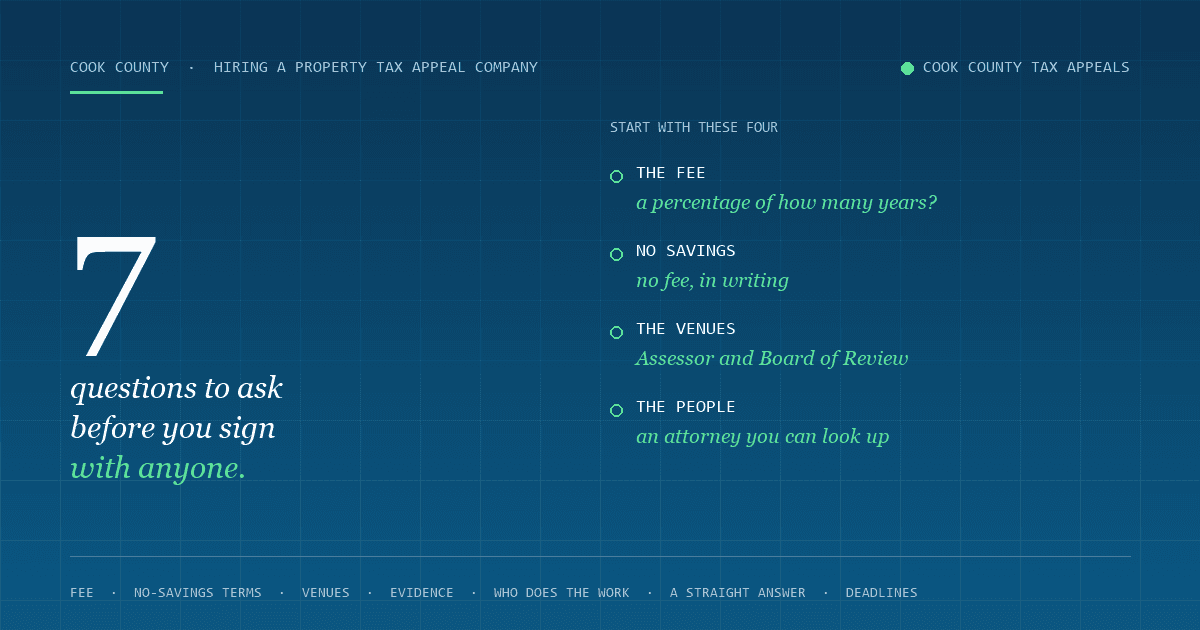
If your assessed value is too high, an appeal can lower a future second-installment bill and keep it lower through the cycle. We check your value against comparable properties — for commercial, against the income approach — and file on your behalf. $0 upfront. 25% of first-year savings, only if your assessment is reduced.
06 · Working with usWorking with us on a Cook County appeal
Finding and paying the bill is the Treasurer's domain; making sure it's fair is ours. We review your assessment against comparable properties (and, for commercial property, against the income approach), confirm your exemptions are applied, and file at both the Assessor and the Board of Review — escalating to PTAB where the numbers justify it.
We work on contingency: no upfront cost, and we're paid a share of the savings only if the appeal reduces your bill. If your assessment is already fair, the honest answer is to tell you so — and we will.
Frequently asked questions
Where do I find my Cook County second-installment bill?+
Why is the second installment bigger than the first?+
Why is my second installment late?+
I never got a paper bill — do I still have to pay?+
My mortgage company pays my taxes — where's my bill?+
My second installment jumped — what should I do?+
Does an appeal change the bill I'm holding?+
Is the firm's site where I pay my bill?+
Find the bill at the Treasurer — then make sure it's fair
Locating your second installment is the easy part: search by PIN or address at the Cook County Treasurer. The bigger question is whether the assessment behind it is right. Cook County Tax Appeals reviews your value, confirms your exemptions, and files across all three tiers (Assessor, Board of Review, and PTAB) — with nothing upfront. Our fee is 25% of first-year savings, only if your assessment is reduced.
Sources & verification
Bill lookup, the two-installment structure, the 55% first-installment rule, second-installment timing and delays, the 0.75% monthly late charge, and exemption mechanics are drawn from the Cook County Treasurer and Assessor. Due dates change year to year — always confirm current dates and your balance on the Treasurer's official site.
- Cook County Treasurer's Office — online bill lookup by PIN or address, payment status, and due dates. cookcountytreasurer.com
- Cook County Treasurer / Assessor — second installment reflects current value, rate, and exemptions; due date set annually and subject to billing delays. cookcountyassessoril.gov
- Illinois Property Tax Code — statutory monthly late charge on unpaid installments.
Find the bill at the Treasurer — then make sure it's fair.
The second installment is only as fair as the assessment behind it. We review your value, confirm your exemptions, and handle all three appeal tiers (Assessor, Board of Review, PTAB) under one engagement. $0 upfront. 25% of first-year savings, only if your assessment is reduced.