5 Signs Your Cook County Property Is Overassessed
Your property tax bill is built on your assessed value. When that value runs too high, you overpay — often for years. Most owners never notice until they read the assessment notice closely. Here are five signs worth checking.
an overassessment
as a share of market value
before the next cycle
Assessor + Board
The Short Version
- You may be overassessed when your assessed value doesn't match your property's real value or characteristics.
- Sign 1: your assessed value implies a price higher than comparable homes recently sold for.
- Sign 2: the Assessor's record of your property has errors.
- Sign 3: your taxes jumped with no matching rise in local market values.
- Sign 4: similar nearby properties are assessed lower.
- Sign 5: real problems (damage, vacancy, obsolescence) aren't reflected in the value.
- If one or more fits, check your township's appeal deadline and gather evidence.
Property taxes in Cook County are based on your property's assessed value. When that value is higher than it should be, you pay more than your fair share — and many owners don't realize it until they look closely. Knowing the warning signs helps you decide whether an appeal is worth it.
What "Overassessed" Means in Cook County
The Assessor estimates your property's market value, then applies an assessment level — 10% for residential, 25% for most commercial — to set the assessed value that drives your tax bill. An overassessment happens when that value doesn't reflect your property's true market value or characteristics, whether from outdated data, incorrect details, or shifting market conditions. Want the full picture of how the two values relate? See our guide on assessed value vs market value.
The 5 Signs
Your assessed value is higher than recent sale prices
One of the clearest signs is a mismatch between the market value implied by your assessment and what comparable properties actually sold for. The Assessor uses mass-appraisal models that don't always capture specific conditions or local trends.
Review recent comparable sales nearby — similar size, age, and location. If your implied value is noticeably higher than those sales, it may be time to appeal.
Your property details are incorrect
Assessment errors often trace back to inaccurate property data. Common ones to look for:
- Incorrect square footage
- Wrong number of bedrooms or bathrooms
- Misclassified property type
- Outdated building improvements
Even small inaccuracies inflate your assessed value. You can verify your property's details on the Cook County Assessor's website — and correcting them during an appeal can make a real difference.
Your taxes increased without market support
A rising tax bill doesn't always mean your value rose at the same rate. Taxes are influenced by tax rates and local budgets too. But if your assessed value climbs sharply while local property values stay flat, that gap can signal an overassessment.
Compare your assessment notice against market trends in your township. If there's no clear justification for the jump, it may be worth challenging.
Similar properties are assessed lower
Uniformity is a core principle of property taxation — comparable properties should carry comparable assessed values. If similar properties near you are assessed lower, yours may not be assessed fairly. This is especially relevant for:
- Condominium units in the same building
- Single-family homes on the same block
- Commercial properties with similar use
Assessment data is publicly available in Cook County, so you can compare directly. Documented inconsistencies strengthen an appeal.
Your property has issues the assessment ignores
Mass-appraisal systems don't account for property-specific problems. Frequently overlooked:
- Structural damage or deferred maintenance
- Location disadvantages such as noise or limited access
- Functional obsolescence in commercial buildings
- Vacancy or reduced income potential
If factors that lower your property's value aren't reflected in the assessment, your valuation may be too high. Documenting these conditions supports your case.
How to File a Cook County Appeal
If one or more signs fit, you may be eligible to file. The process runs in three steps.
Step 1: Check your appeal deadline
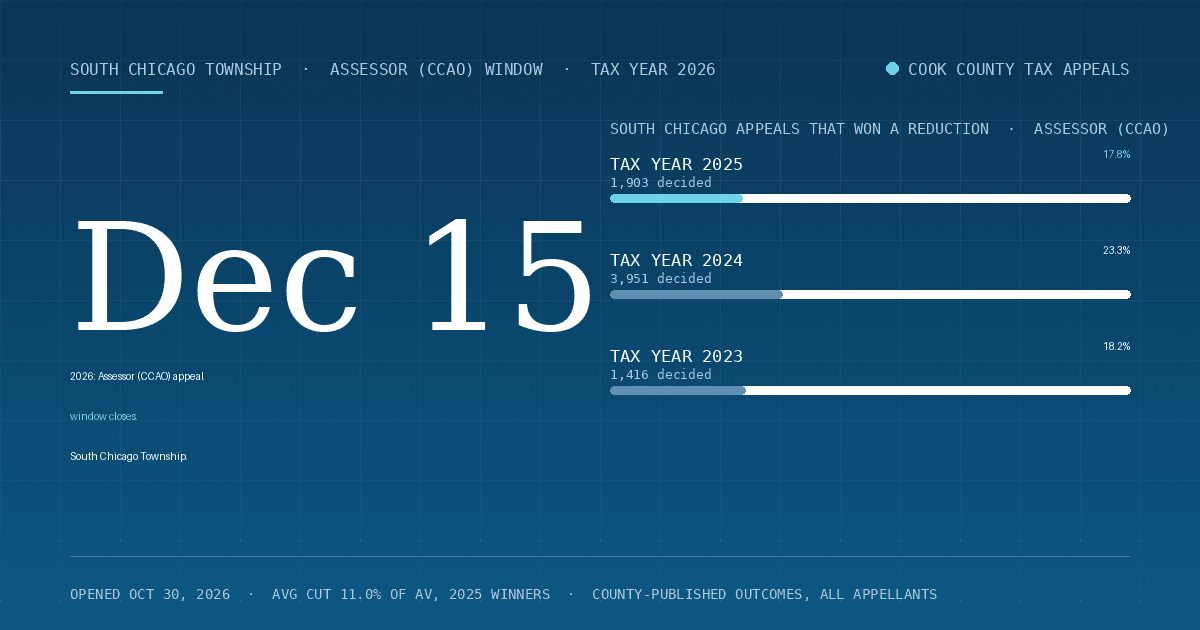
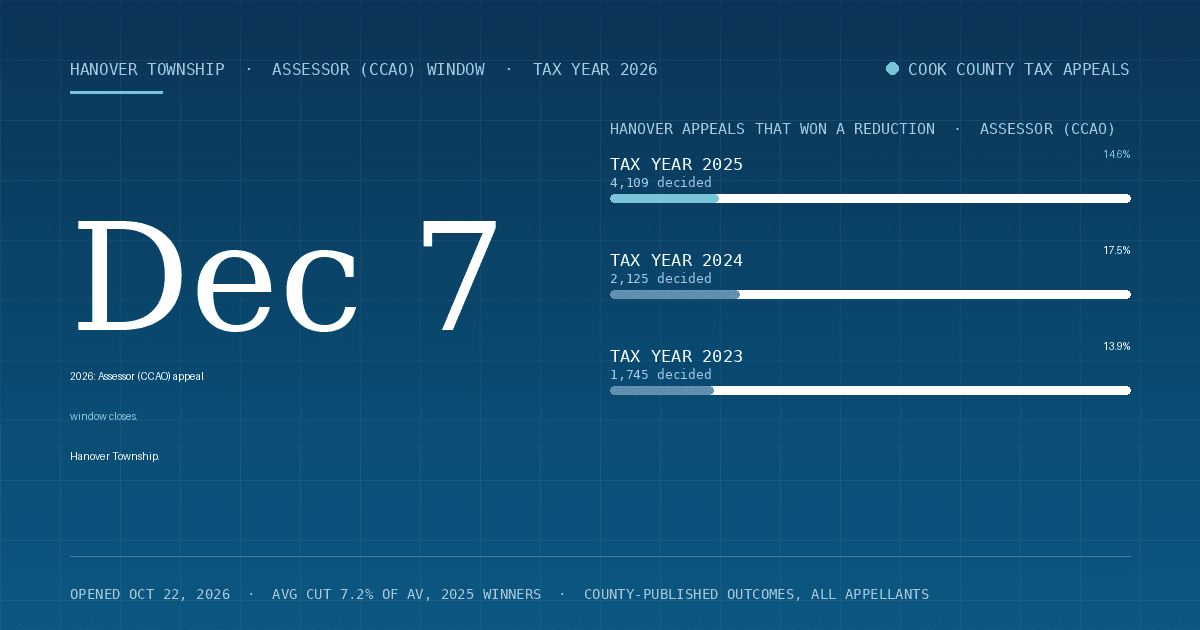
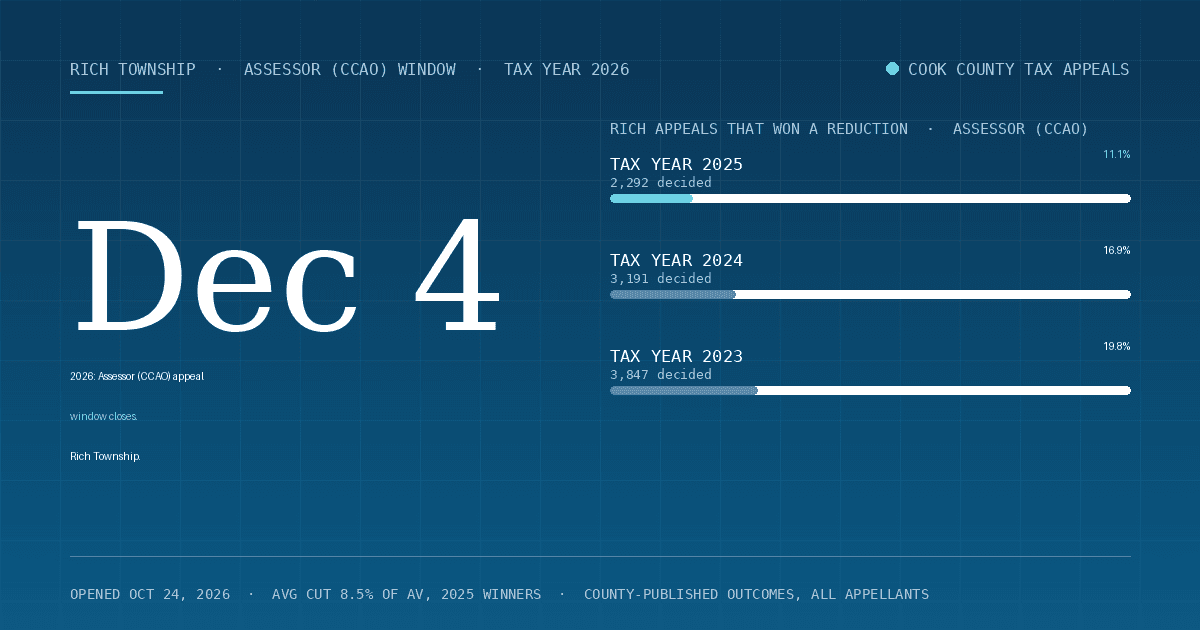
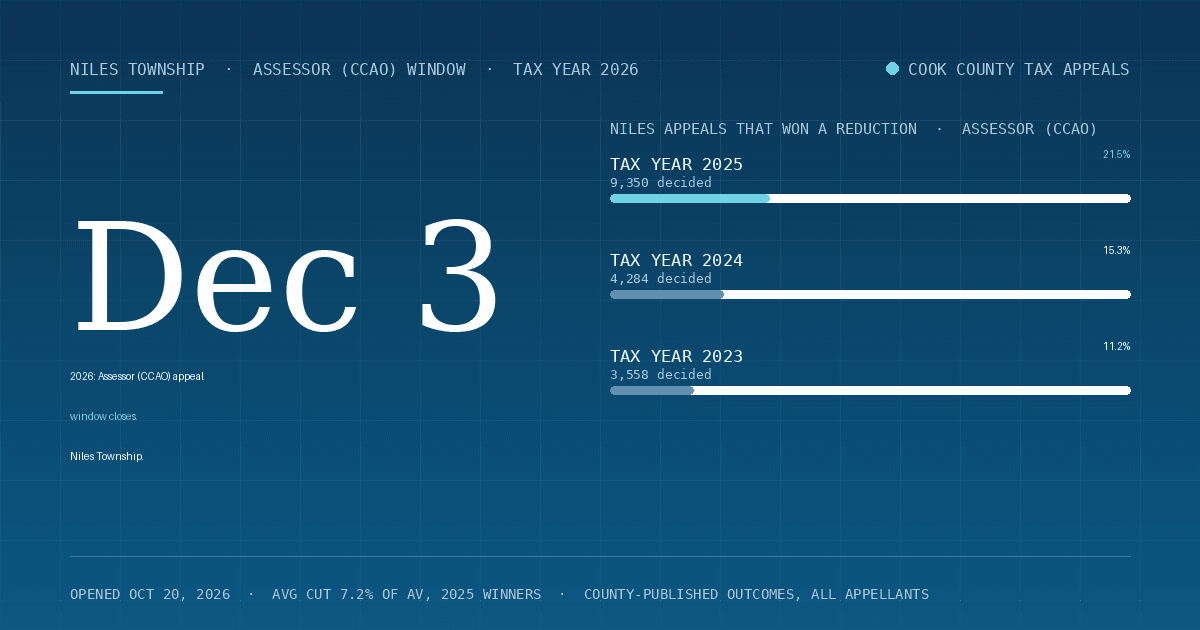
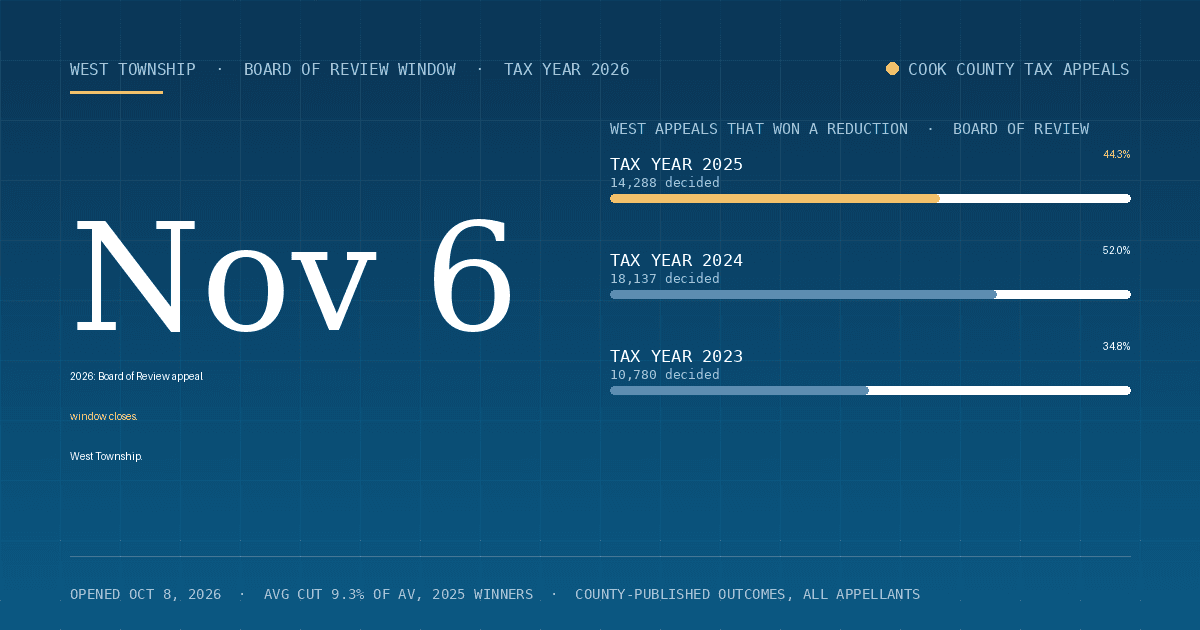
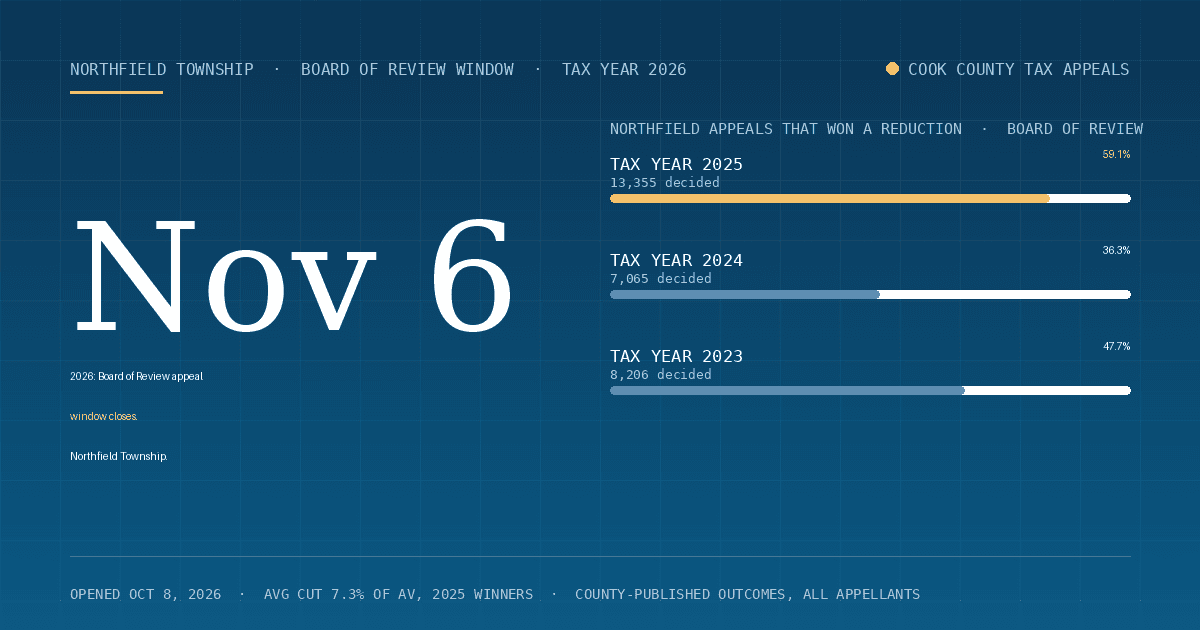
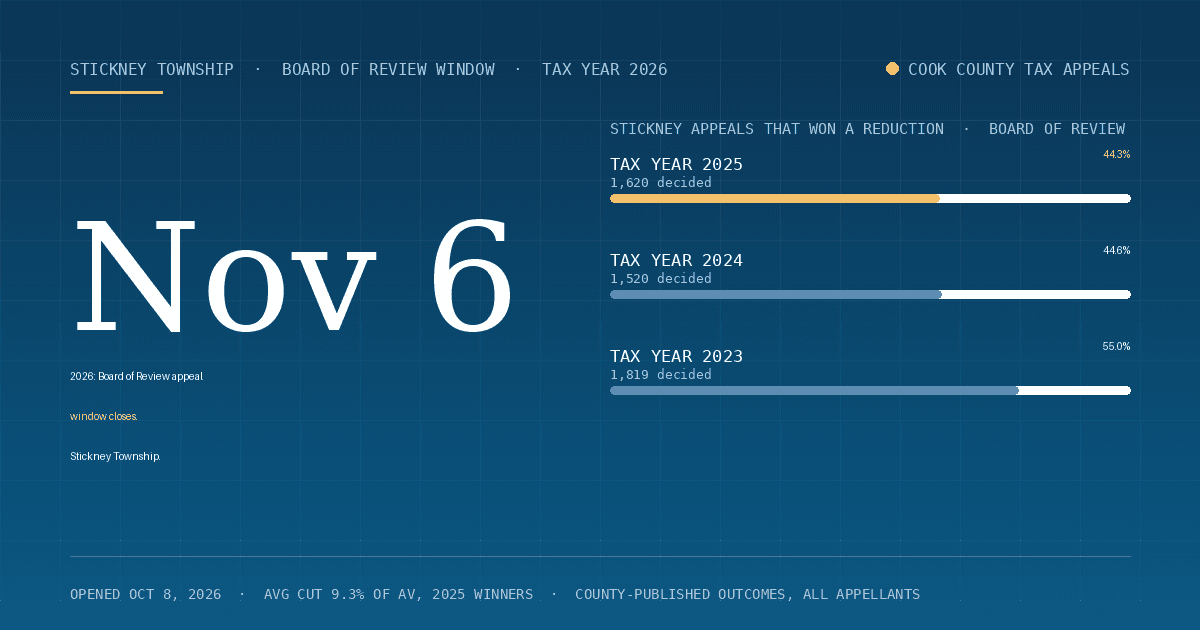
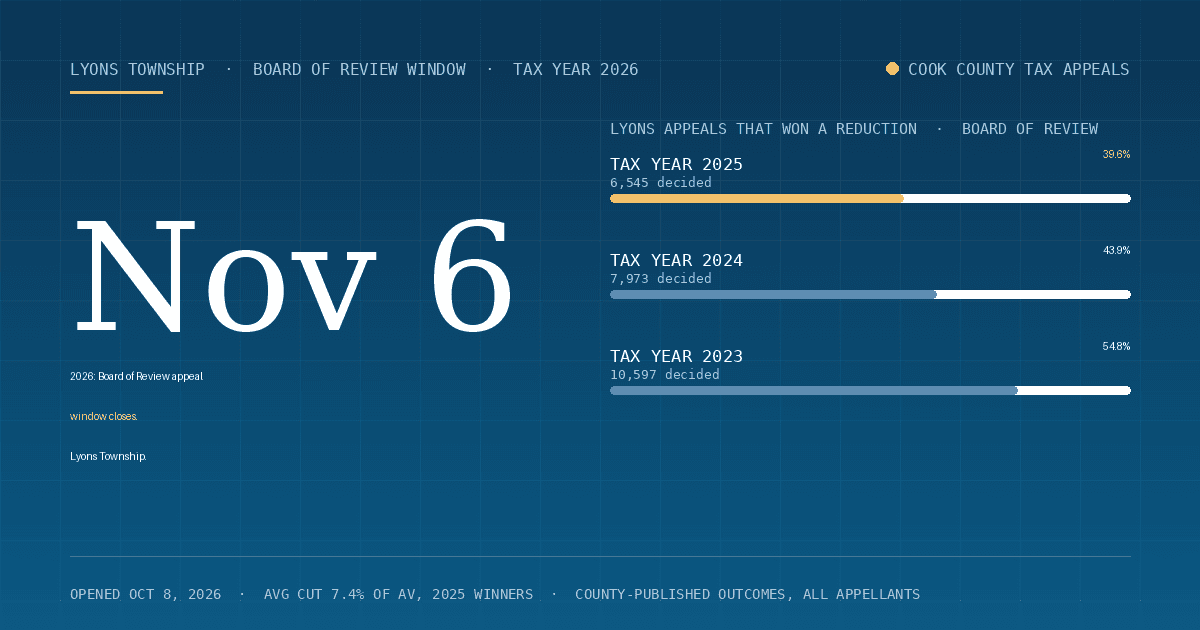
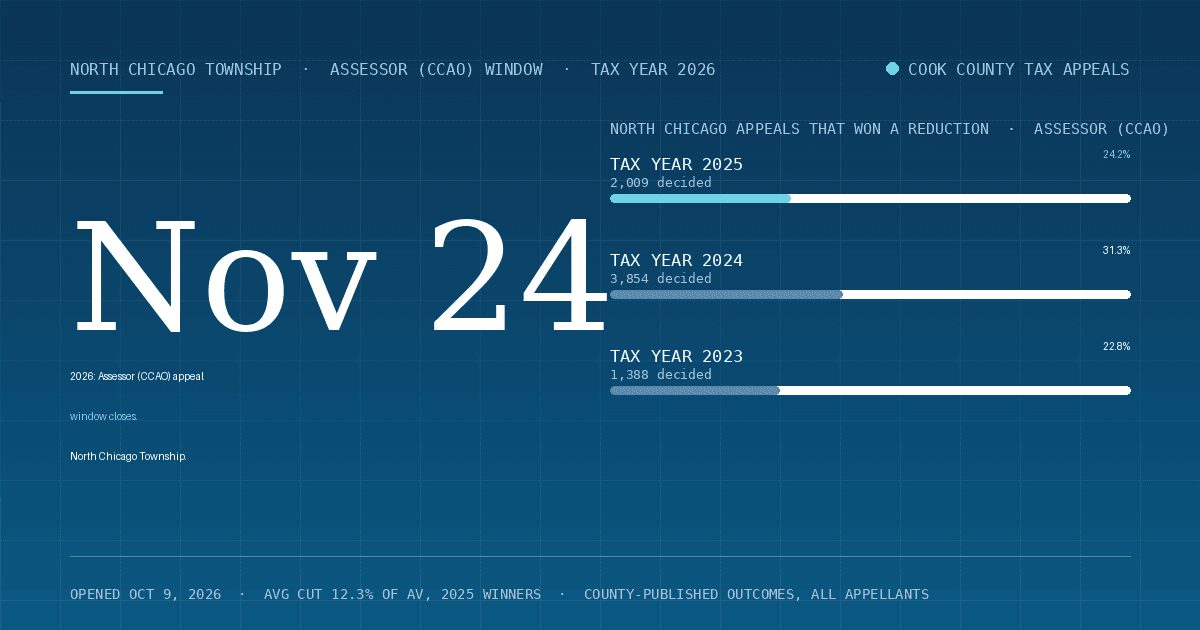
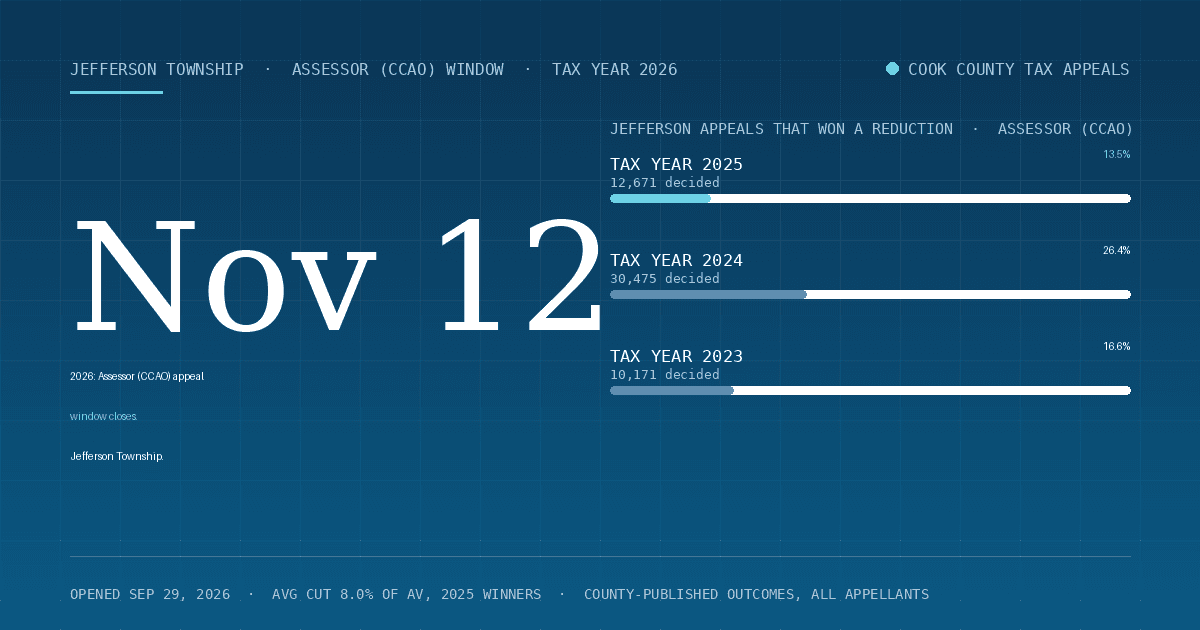
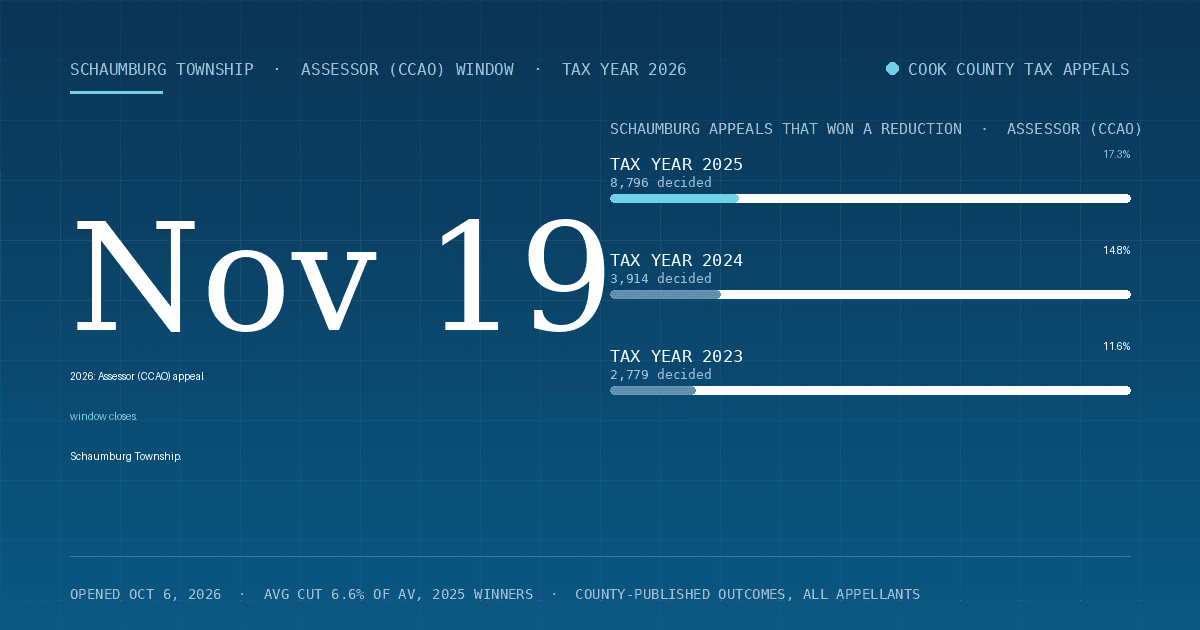
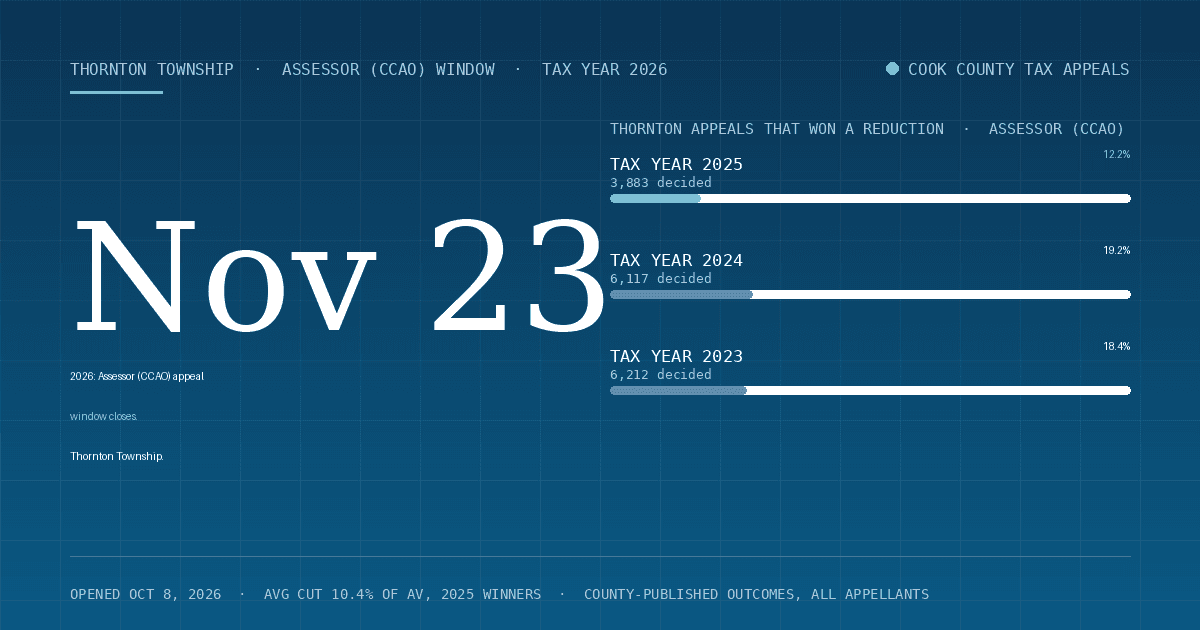
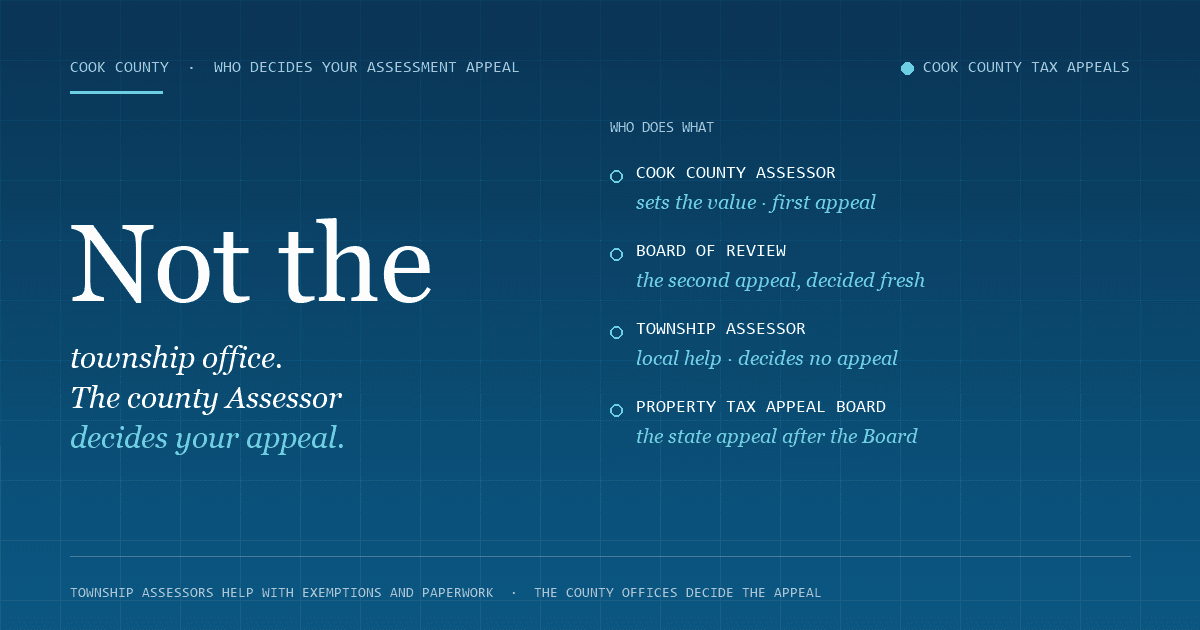
Appeals are filed during your township's open window with the Cook County Assessor. If that window has passed, you can still appeal with the Cook County Board of Review when it opens for your township. Find your window on our deadlines page.
Step 2: Gather supporting evidence
Strong appeals rest on clear evidence:
- Recent comparable sales
- Photos of property condition
- Corrected property details
- Income and expense data, for commercial property
Step 3: Submit your appeal
You can file online through the Assessor or Board of Review portals. Each requires supporting documentation and a clear explanation of why your assessment should be reduced. Because a strong case rests on solid comparables and valuation arguments, many owners get help — learn about our residential appeal services.
Why Reviewing Your Assessment Matters
Your assessment directly drives your annual bill, and even a modest reduction compounds over time — a value can stand for a full three-year cycle. Because Cook County reassesses on that rotating schedule, it pays to review your assessment each year and act when something looks off.
See If You're Overassessed
Enter your address and we'll check your assessment against comparable properties — so you can see whether your value lines up with reality before your deadline.
Check My AssessmentFrequently Asked Questions
What does it mean to be overassessed in Cook County?
Your property is overassessed when its assessed value doesn't reflect its true market value or characteristics. Since your tax bill is built on that value, an overassessment means you pay more than your fair share.
How can I tell if my property is overassessed?
Watch for five signs: your assessed value implies a price above recent comparable sales; the Assessor's record of your property contains errors; your taxes jumped without a matching rise in market values; similar nearby properties are assessed lower; or real issues like damage or vacancy aren't reflected in the value.
How do I check the market value the county is taxing me on?
For a home, multiply your assessed value by 10, since residential property is assessed at 10% of market value. If your home wouldn't realistically sell for that amount, you may be overassessed.
What evidence helps an overassessment appeal?
Recent comparable sales, photos documenting condition problems, corrected property details, and — for commercial property — income and expense data. Clear evidence that your property's value is lower than the assessment is what wins reductions.
What if I missed my township's Assessor deadline?
The Assessor is the first deadline, not the only one. Every township also gets a separate Board of Review window after the Assessor closes, so you may still be able to appeal there.
Keep Reading
This article is general information about Cook County property assessments and is not legal or tax advice. Assessment levels are set by Cook County ordinance and filing deadlines are set by the Cook County Assessor and Board of Review; always confirm your details against your reassessment notice and the Assessor's Office. Representation is subject to a written engagement agreement.