Property taxes in Cook County are built on two numbers: your property's assessed value and the local tax rate. You can't change the rate — but if your assessed value is too high, you're paying more than your fair share, and there are several legal, effective ways to fix that.
01 · Why it mattersWhy property tax reduction is worth your time
High property taxes compound year after year. Because Cook County assessments roll forward until you challenge them, an inflated value quietly overcharges you every single cycle until someone corrects it. Even a modest reduction in assessed value can mean meaningful savings — improving affordability for homeowners and cash flow and returns for commercial owners.
The strategies below apply to both residential and commercial property. None of them require you to be an expert; they just require you to act early and use the right approach. Here are the seven that actually move the needle.
02 · The playbookSeven strategies that actually work
File a property tax appeal
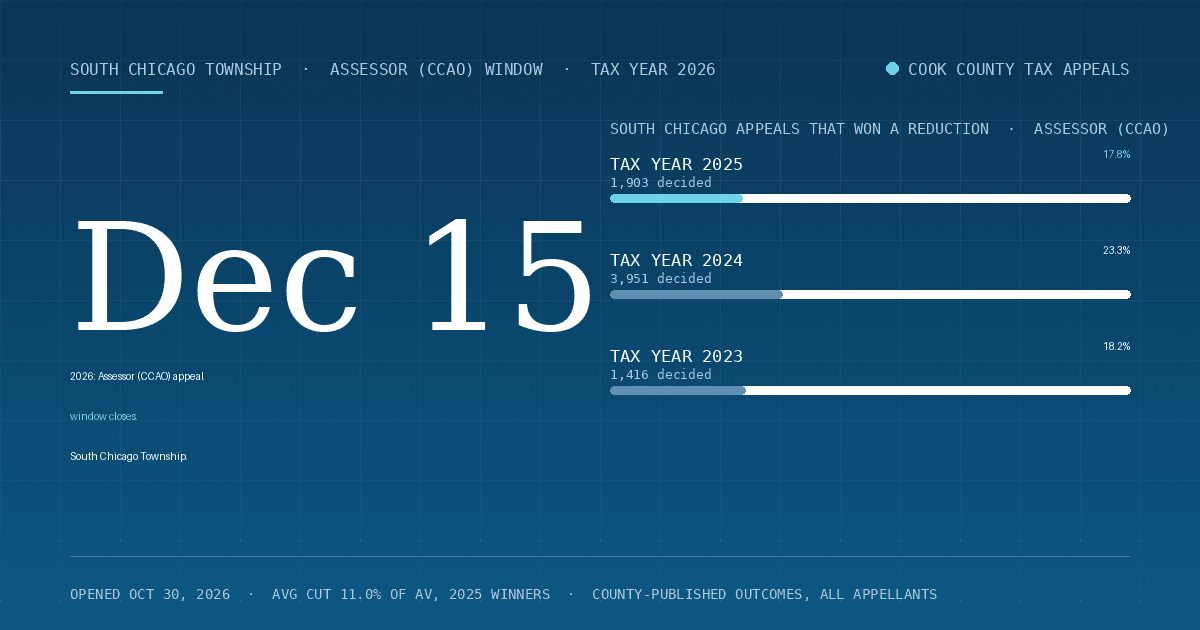
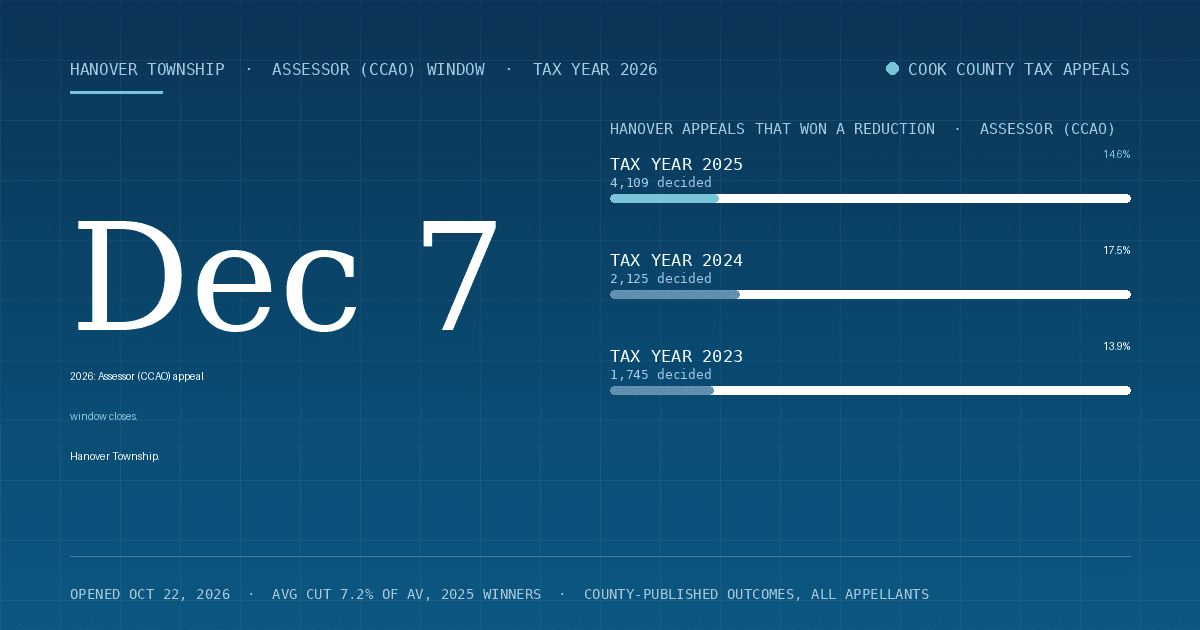
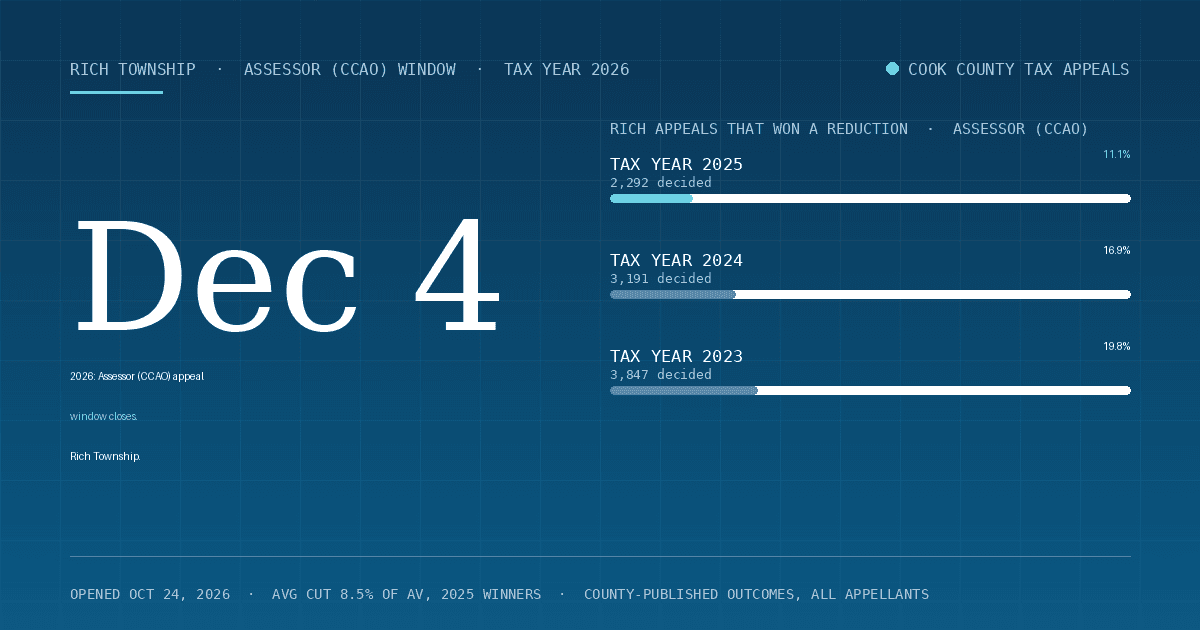
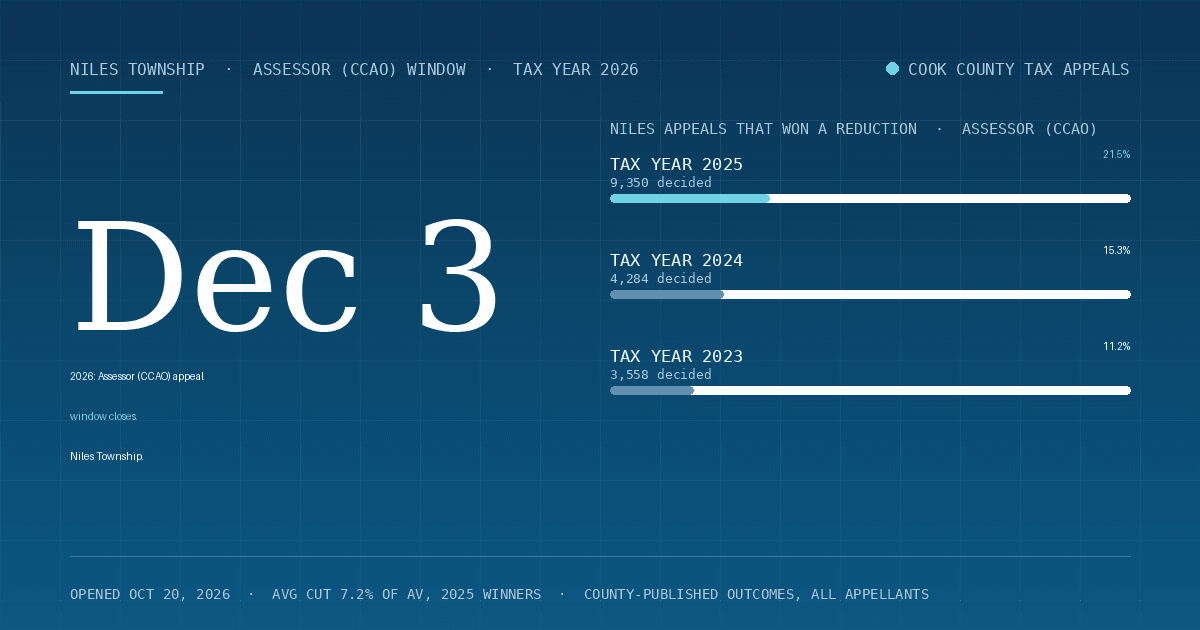
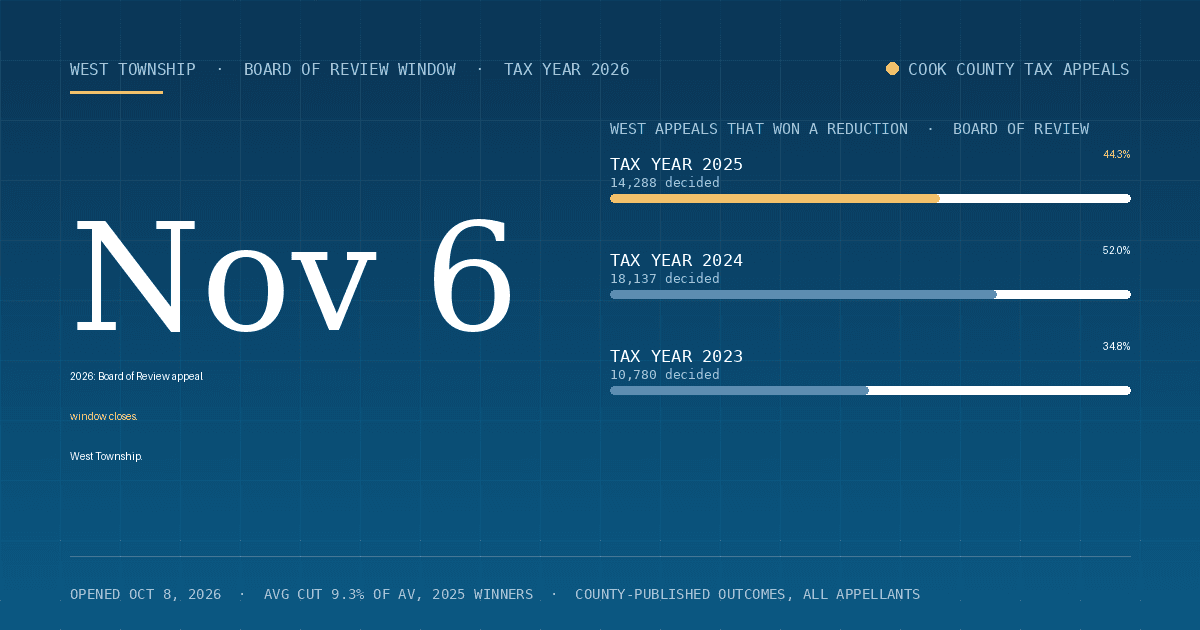
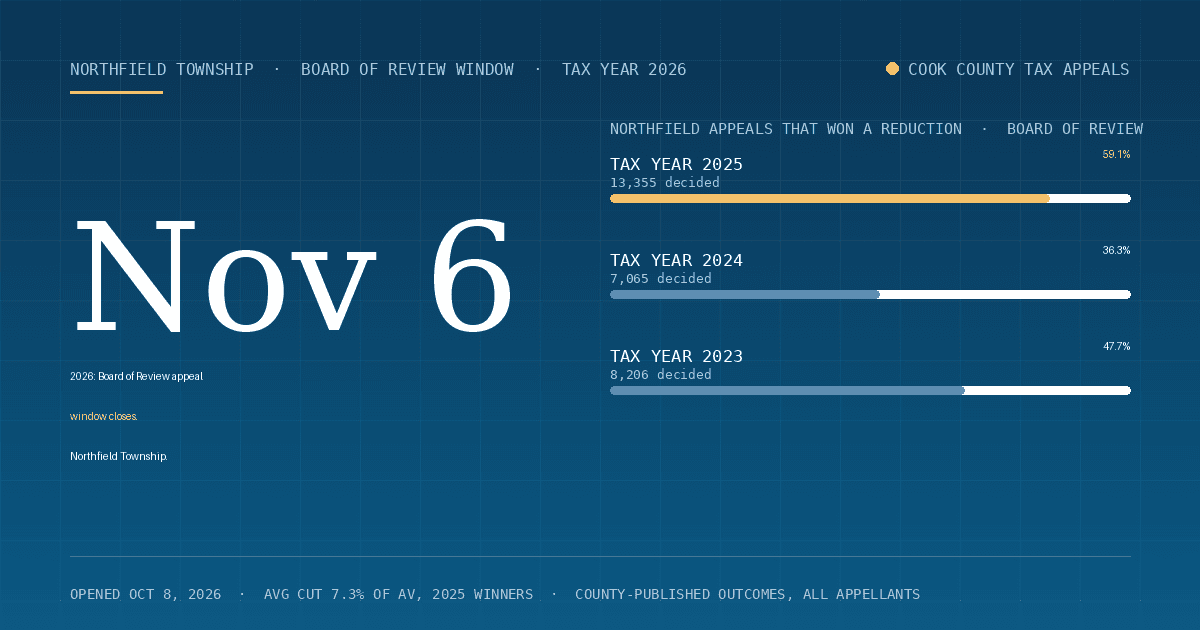
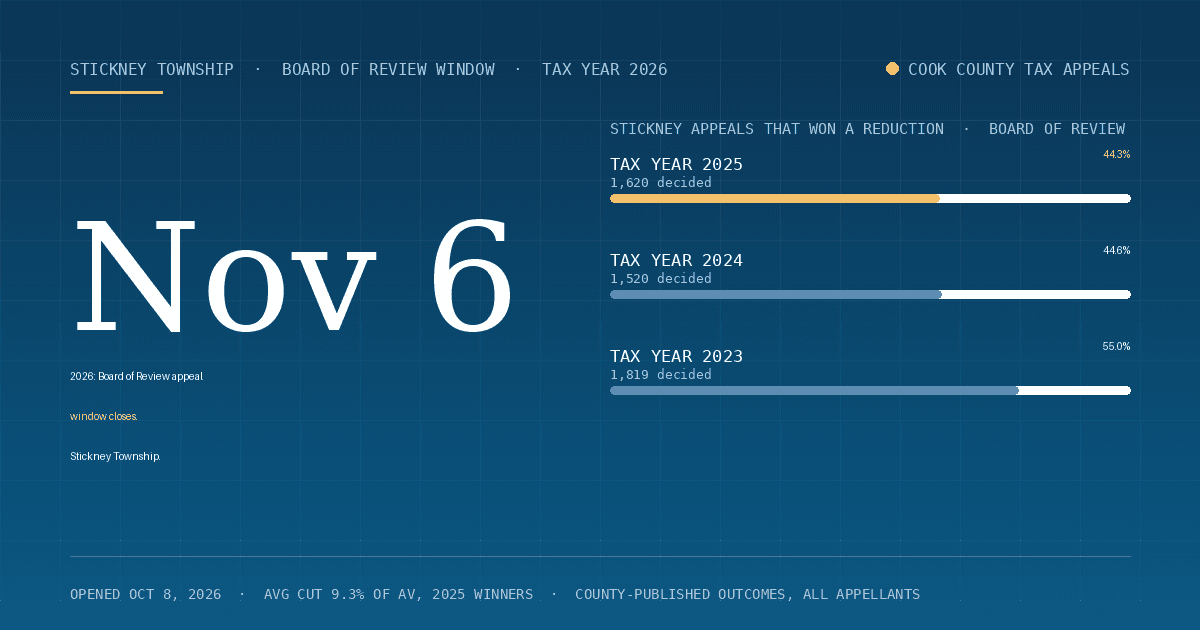
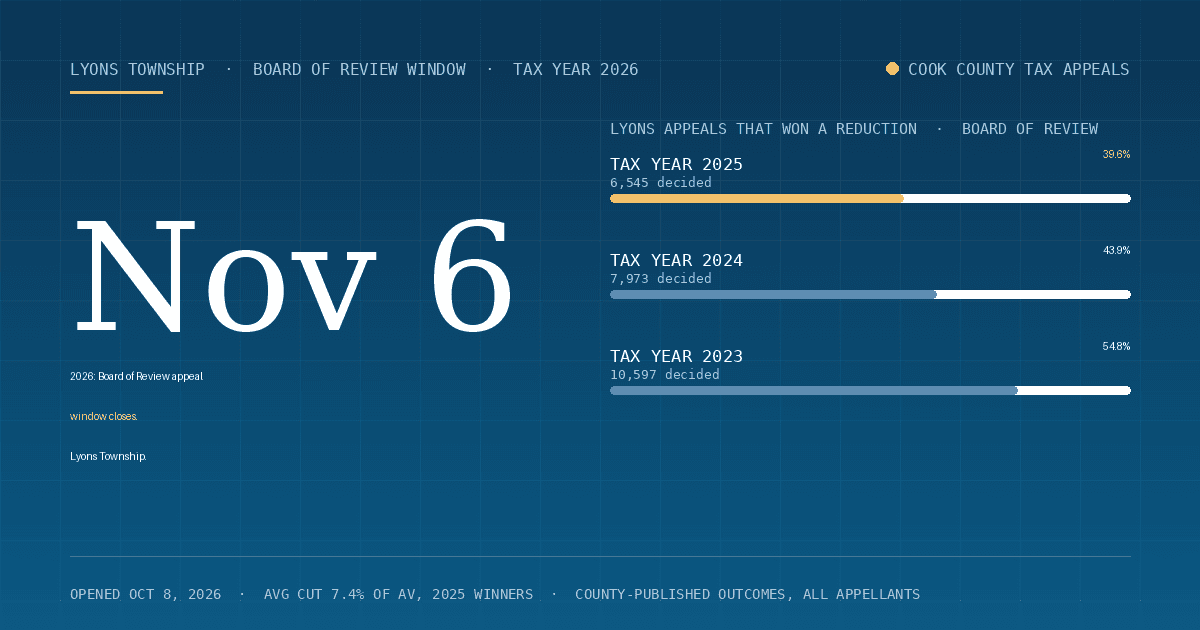
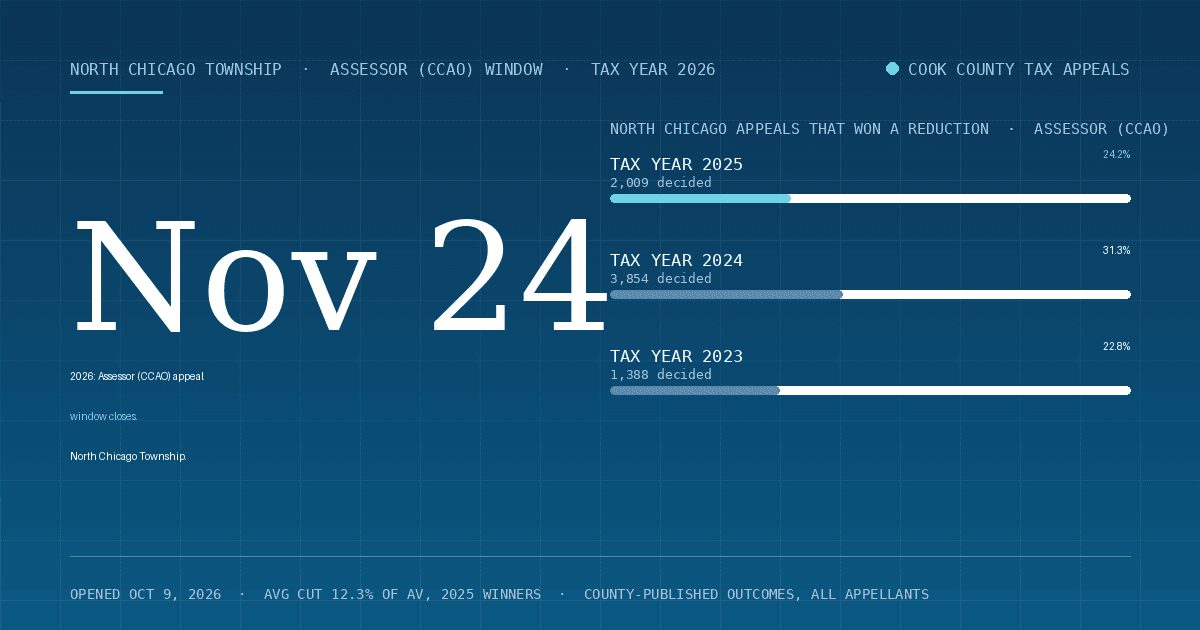
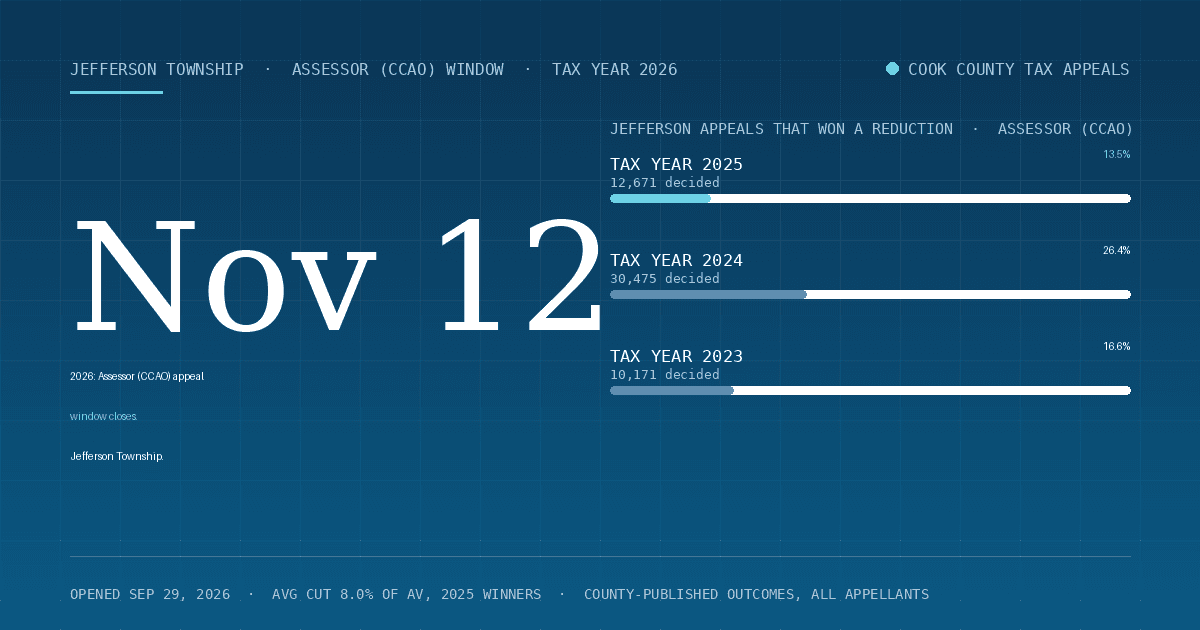
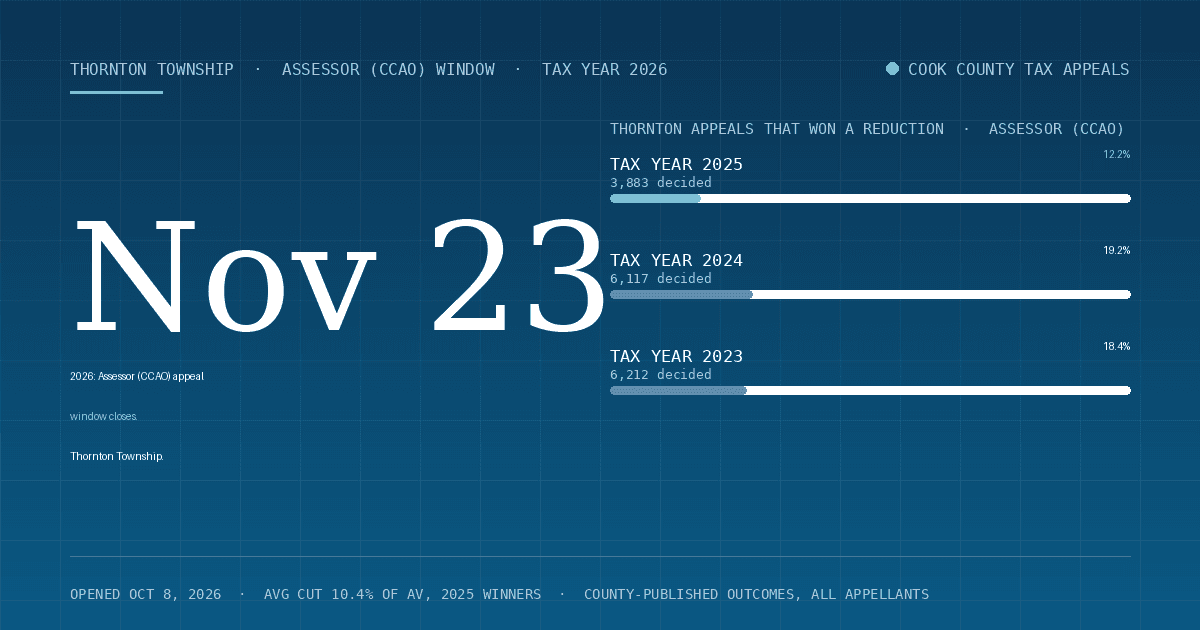
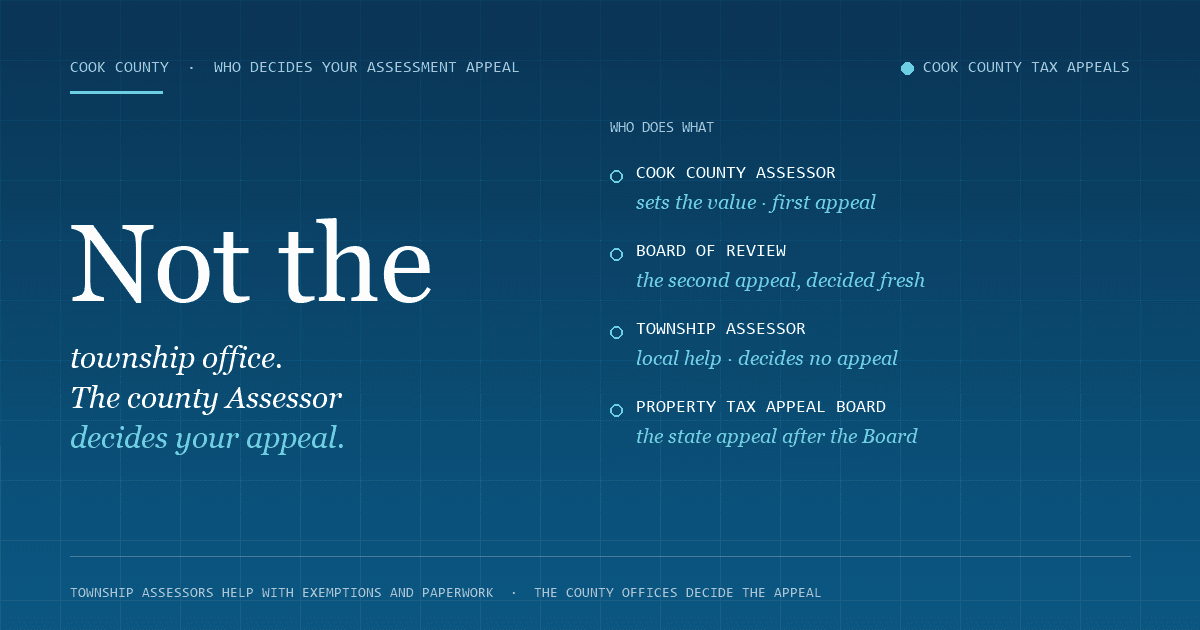
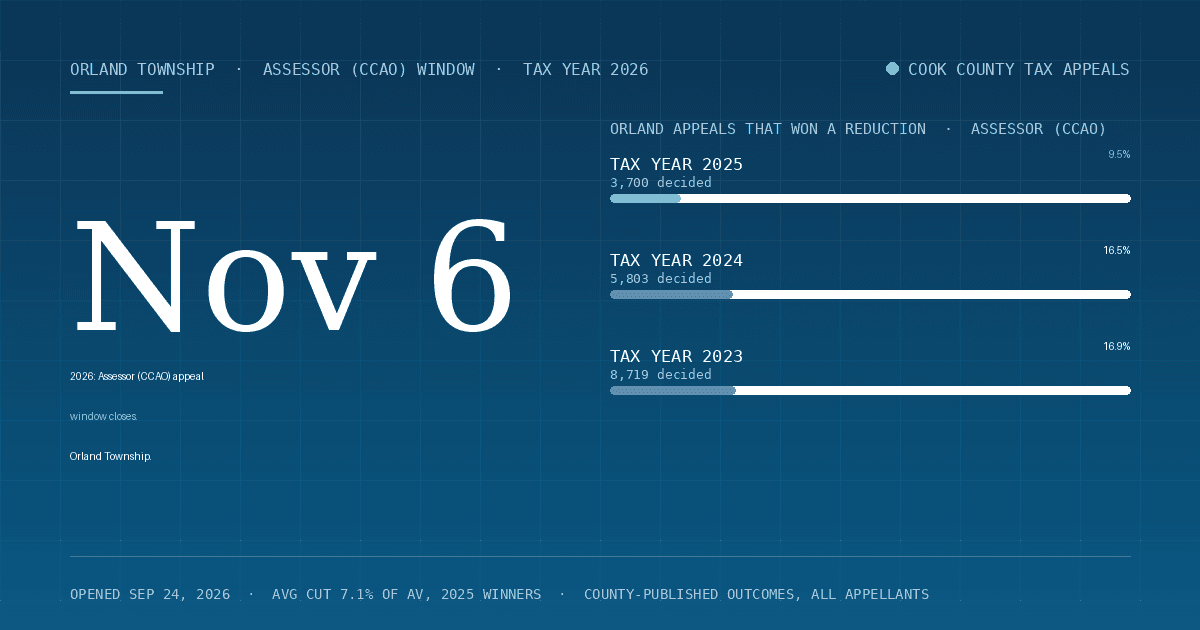
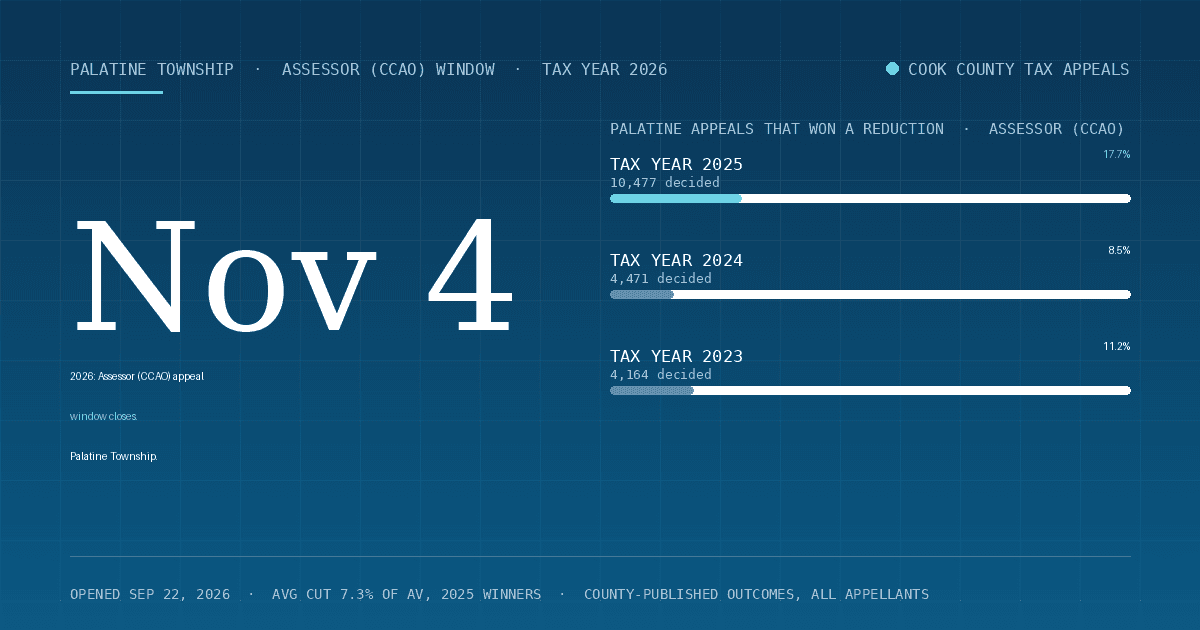
This is the core move. Cook County gives you two independent chances each year. First, file with the Cook County Assessor (CCAO) during your township's open window. If that result falls short — or you missed the Assessor window entirely — you can file a separate appeal with the Board of Review (BOR), which conducts its own evidence-based review. You can appeal if your property is over-valued, if comparable properties are assessed lower, or if your property details are wrong.
Track filing deadlines and township openings on the Cook County property tax appeal deadlines page.
Use accurate comparable sales
Comparables — "comps" — are the most persuasive evidence in most appeals. They prove your property is assessed higher than similar ones around it. The strongest comps are:
- Located near your property
- Similar in size, age, class, and features
- Recent — ideally sold or assessed within the past year
The Assessor's rules ask for at least three genuine, arm's-length comparables — not cherry-picked outliers.
Check for property record errors
Many properties are over-assessed simply because the county's record is wrong. Pull your property record card and check it line by line. Common errors that inflate value:
- Incorrect square footage
- Wrong number of rooms, bathrooms, or units
- Misclassified property type
- Outdated or inaccurate building details
Correcting a factual error can lower your assessment on its own — often the fastest reduction available.
Claim every exemption you qualify for
Exemptions reduce your home's equalized assessed value (EAV) directly, and they're among the easiest savings to capture. The Homeowner Exemption alone removes $10,000 of EAV. Missing an exemption you qualify for costs you money every single year — so confirm what's on your bill. (Full table below.)
Document property condition issues
Your property's condition affects its value, and the assessment may assume it's in better shape than it is. If your property has structural damage, needed repairs, outdated interiors, or deferred maintenance, document it with photos, contractor estimates, and inspection reports. Concrete condition evidence can meaningfully strengthen an appeal.
Analyze local market trends
Values move with the local market. If prices in your area are flat or declining but your assessment went up, that gap is itself grounds for an appeal. Understanding the trend lets you frame a stronger argument — and shows the assessed value is out of step with reality.
Never miss a deadline
Missing your filing window means losing the chance to reduce your taxes for that year — and paying the higher bill in the meantime. Windows are township-specific: several weeks (42 to 47 days in 2026) at the Assessor, about 30 days at the Board of Review. Monitor your township's reassessment cycle, check filing windows regularly, and prepare your documents in advance so you're ready on day one.
When to bring in help
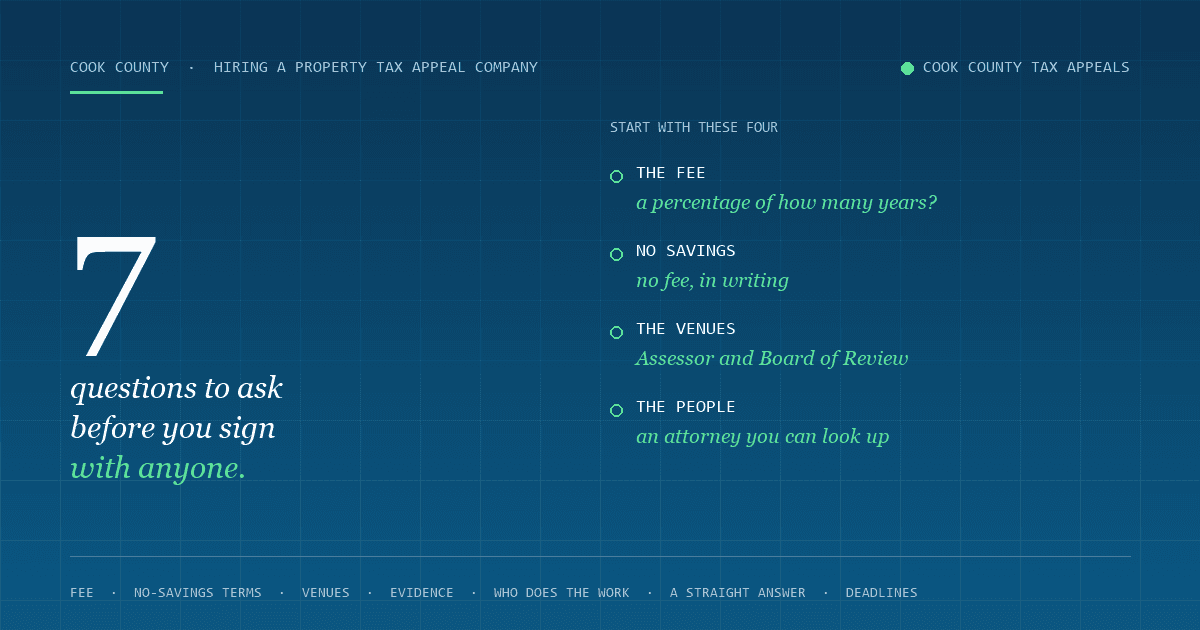
Many owners file on their own. Professional support tends to pay off in complex cases: commercial properties with income data, large assessment increases, tight timelines, or situations where good comparables are hard to find. An experienced firm also handles both the Assessor and Board of Review stages so nothing slips.
We run the whole playbook for you.
Enter your PIN and we'll check your record, pull your comps, confirm your exemptions, and file at both the Assessor and the Board of Review — on deadline. 25% of first-year savings, only if your assessment is reduced.
03 · ExemptionsCommon Cook County exemptions
Exemptions reduce your equalized assessed value before the tax rate is applied. One important note: the EAV reduction is not the dollar amount taken off your bill — your actual savings is the exemption amount multiplied by your local tax rate. Here are the main ones and what they're worth.
Cook County homestead exemptions · 2025 tax year
| Exemption | EAV reduction | Who qualifies | Renewal |
|---|---|---|---|
| Homeowner | $10,000 | Owner-occupants of a primary residence | Auto |
| Senior Citizen | $8,000 | Age 65+ (any income) | Auto |
| Senior Freeze | Freezes EAV | Seniors w/ household income ≤ $65,000 (2025 tax year; $75,000 for 2026) | Annual |
| Persons with Disabilities | $2,000 | Owner-occupants with a disability | Auto |
| Veterans with Disabilities | $2.5k–100% | By rating; full exemption at 70%+ (home EAV ≤ $250k) | Annual |
| Returning Veterans | $5,000 | Veterans returning from active duty | One-time |
| Home Improvement | Up to $75k | Added value from improvements, untaxed 4 yrs | Auto |
Most homeowners are eligible for the Homeowner Exemption, and many qualify for more than one. The Homeowner and Senior exemptions auto-renew, but the Senior Freeze and Veterans with Disabilities exemptions must be filed annually — so check your second-installment tax bill each year to confirm they're applied. If an exemption you qualify for is missing, you can usually redeem it for prior years through a Certificate of Error.
04 · The strategyCombine strategies, and keep at it
The single biggest mistake is treating these as either/or. The most effective approach stacks them — for example, filing an appeal backed by strong comparable sales, while also correcting a record error and confirming every exemption is applied. Each one chips at the bill from a different angle, and together they compound.
Reduction is a habit, not a one-time event
Assessments change over time, especially in reassessment years. A reduction you win this cycle doesn't lock in forever — values reset, and the burden is on you to challenge a new over-assessment when it appears. Reviewing your property value every year and appealing when the numbers warrant it is how owners avoid quietly overpaying for years at a stretch.
Stack your strategies
Appeal + comps + record fix + exemptions beats any single move. They attack the bill from different angles and compound.
Exemptions are free money
They're the easiest savings to capture and the most commonly missed. Check your bill every year and claim everything you qualify for.
Stay on the calendar
Windows last weeks, not months, and are township-specific. Appealing annually — even in off years — is how you stop overpaying long-term.
Frequently asked questions
What's the fastest way to lower my Cook County property taxes?+
How much can an exemption actually save me?+
Can I appeal if I missed the Assessor's deadline?+
Do these strategies work for commercial property too?+
Do I have to reapply for my exemptions every year?+
Should I hire someone or do it myself?+
The bottom line
Reducing your Cook County property taxes is absolutely possible with the right approach. By understanding your assessment, backing your case with strong evidence, fixing record errors, and claiming every exemption available, you can bring an inflated bill back to fair — whether you own a home or a commercial building. The key is to stay informed, act on time, and build a strong case.
To track deadlines, review your property, and put these strategies to work, Cook County Tax Appeals provides local guidance — and can run the entire playbook for you.
Sources & accuracy
Exemption amounts and rules reflect the Cook County Assessor's Office published exemption pages and the Illinois Department of Revenue (PIO-74), current as of June 2026: Homeowner $10,000 EAV, Senior $8,000 EAV, Senior Freeze (household income ≤ $65,000, minimum $2,000 deduction), Persons with Disabilities $2,000, Returning Veterans $5,000, and Veterans with Disabilities tiered by rating (full exemption at 70%+, home EAV ≤ $250,000). An EAV reduction is not the dollar amount removed from a tax bill — savings equal the EAV reduction times your local tax rate. Exemption amounts, income limits, and deadlines can change; always confirm current figures and your filing dates on the Assessor's official pages before relying on them.Stop overpaying. Put all seven to work.
The strategies above work best together — and we run every one of them for you. We check your record, build your comps, confirm your exemptions, and file at the Assessor, Board of Review, and PTAB if it makes sense. No upfront cost; we're paid only if we save you money.