What Are the Tax Changes for 2026 in Illinois?
If you live or run a business in Cook County, several Illinois tax changes took effect in 2026 that can touch your household budget, your business operations, and your investment decisions. Some apply statewide; others feel sharper in Chicago and the suburbs. Here's a plain-English rundown of what actually changed — and what didn't.
- The flat 4.95% income tax rate is unchanged, but several technical rules for businesses — especially pass-throughs and multi-state owners — changed under the FY2026 budget.
- The 1% state grocery tax ended January 1, 2026 — but most Cook County municipalities re-imposed their own local 1% tax, so your grocery bill likely looks the same.
- Online sellers now hit the Illinois sales-tax threshold at $100,000 in sales; the old 200-transaction trigger is gone.
- Tobacco/nicotine and fuel taxes rose. The proposed millionaire surtax stalled and will not be on the November 2026 ballot.
Income tax rate is the same — but the rules around it shifted
Illinois still has a flat individual income tax rate of 4.95%, and that did not change for 2026. For most employees and wage earners, the headline number is steady. Withholding tables and state forms were updated for the year, so it's still worth a quick look at your first few pay stubs to confirm your withholding looks right — but most people won't see a meaningful difference.
The bigger changes are on the business side. Illinois's FY2026 budget (H.B. 2755, signed June 16, 2025) reworked several technical rules that especially affect:
- Partnerships and S corporations (pass-through entities)
- Multi-state businesses with operations or owners outside Illinois
- Corporations with foreign subsidiaries (a reduced deduction for certain foreign income)
The change owners feel most is to how gains on the sale of a pass-through interest are sourced. Historically, when a nonresident sold an interest in an Illinois S corp or partnership, the gain was generally assigned to the seller's home state. Now, gain or loss on that sale is allocated to Illinois using a "look-through" approach — the average of the entity's Illinois apportionment factor for the year of sale and the two prior years. Combined-reporting groups also switched to the Finnigan method, which can raise the Illinois portion of income for multi-state groups.
These sourcing changes can shift how much of your income — or your sale proceeds — is taxed in Illinois. Review your structure with a tax professional before year-end or before any sale, not after.
The state grocery tax ended — but your bill probably didn't change
The most talked-about change is the elimination of the 1% Illinois state grocery tax, effective January 1, 2026. On paper, that sounds like cheaper groceries. In practice, for most Cook County shoppers, it isn't.
Here's why: the law that ended the state tax (Public Act 103-0781) also gave municipalities and counties the authority to impose their own local 1% grocery tax by ordinance. Because that 1% revenue had always flowed to local governments, most chose to keep it — and they could do so without a vote of residents. Statewide, more than half of Illinois municipalities passed a local grocery-tax ordinance, and many Cook County suburbs (and the City of Chicago) are among them.
So in most places the practical effect is a wash: the 1% simply moved from the state line on your receipt to a local one. Where a municipality chose not to re-impose it, qualifying groceries are genuinely 1% cheaper. The only way to know for your town is to check your municipality's status — or just read your next grocery receipt.
The 1% rate applies to the same "qualifying food" as before. Items like candy, soft drinks, alcohol, and prepared/hot food are not groceries and continue to be taxed at the higher general-merchandise rate.
Online sellers: the sales-tax trigger is now $100,000
If you sell products online to Illinois customers, the rule for when you must collect Illinois sales tax was simplified starting in 2026. The threshold is now $100,000 in cumulative sales to Illinois purchasers over a 12-month period. The old "200 separate transactions" trigger has been removed for remote retailers and marketplace facilitators.
The logic is cleaner — one dollar figure instead of two tests — but it cuts both ways. A seller with many small orders that previously crossed the 200-transaction line may now fall below the threshold, while a seller with fewer but larger orders is judged purely on revenue. The definition of "marketplace facilitator" was also expanded to cover certain taxable services. If you sell online, total up your Illinois sales for the year and confirm which side of $100,000 you land on.
Tobacco and nicotine taxes increased
Illinois raised taxes on tobacco products and extended taxation to additional nicotine products, including nicotine pouches. Cook County already layers some of the highest tobacco-related taxes in the country on top of the state's, so these increases tend to show up at the register across Chicago and the suburbs more sharply than elsewhere in Illinois.
Fuel taxes ticked up
Gasoline and diesel taxes saw modest increases heading into 2026, tied to statewide transportation funding. Illinois's motor-fuel tax is indexed to inflation, so it adjusts upward most years. For Cook County commuters who drive daily — especially into downtown Chicago, where local taxes stack on top — fuel costs continue to run high.
Tax credits and income limits
Several Illinois tax credits remain available in 2026, including the education expense credit, the property tax credit, and the state Earned Income Credit. The catch is that some credits phase out at higher income levels. Higher-earning Cook County households shouldn't assume a credit they've claimed before still applies — check the current income limits before you count on it.
The millionaire surtax: proposed, then stalled
You may have heard about a proposed 3% surtax on income above $1 million, with the revenue earmarked for property tax relief and schools. It's worth understanding clearly, because it's directly relevant to property owners — and because its status is widely misreported.
The surtax can't simply be passed as a law. Illinois's constitution requires a flat income tax, so adding a higher rate on income over $1 million would require a constitutional amendment — which means three-fifths approval in both legislative chambers and then approval by voters at the ballot box.
For 2026, that didn't happen. The measure (HJRCA 21) cleared a House committee in April but never got a floor vote, and the House Speaker acknowledged it lacked the votes. With the legislature past the early-May deadline to place a constitutional amendment on the November 2026 ballot, the surtax will not appear on this year's ballot. Voters had twice backed the idea in non-binding advisory questions (2014 and 2024), so supporters are expected to try again in a future session — but as of now it is not law, and not a pending ballot question.
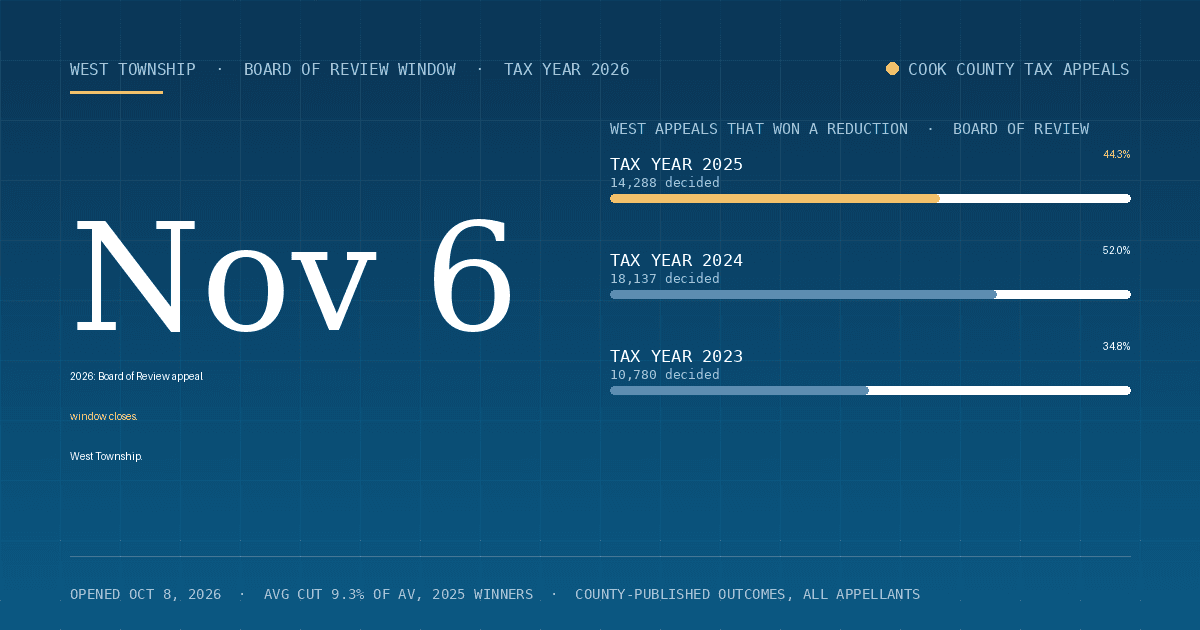
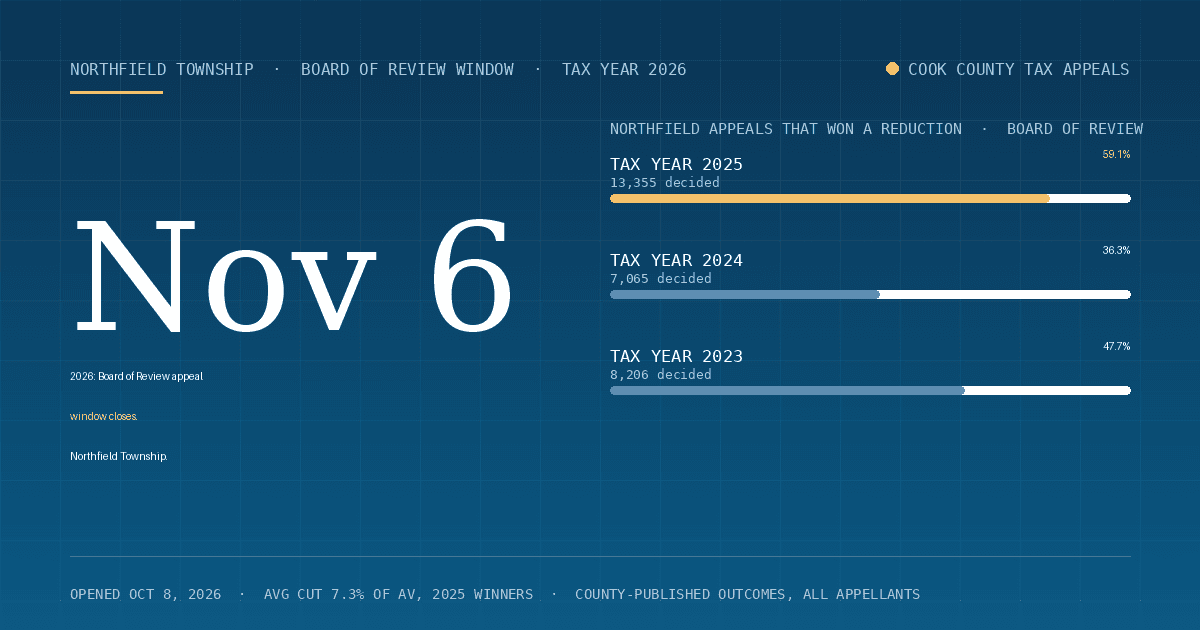
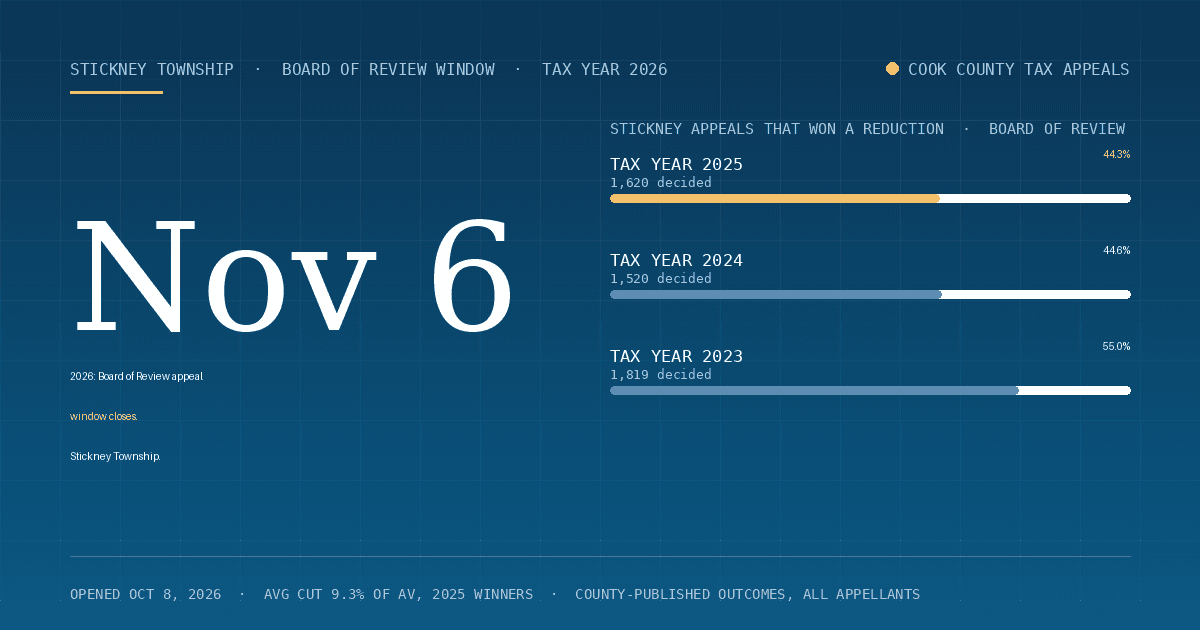
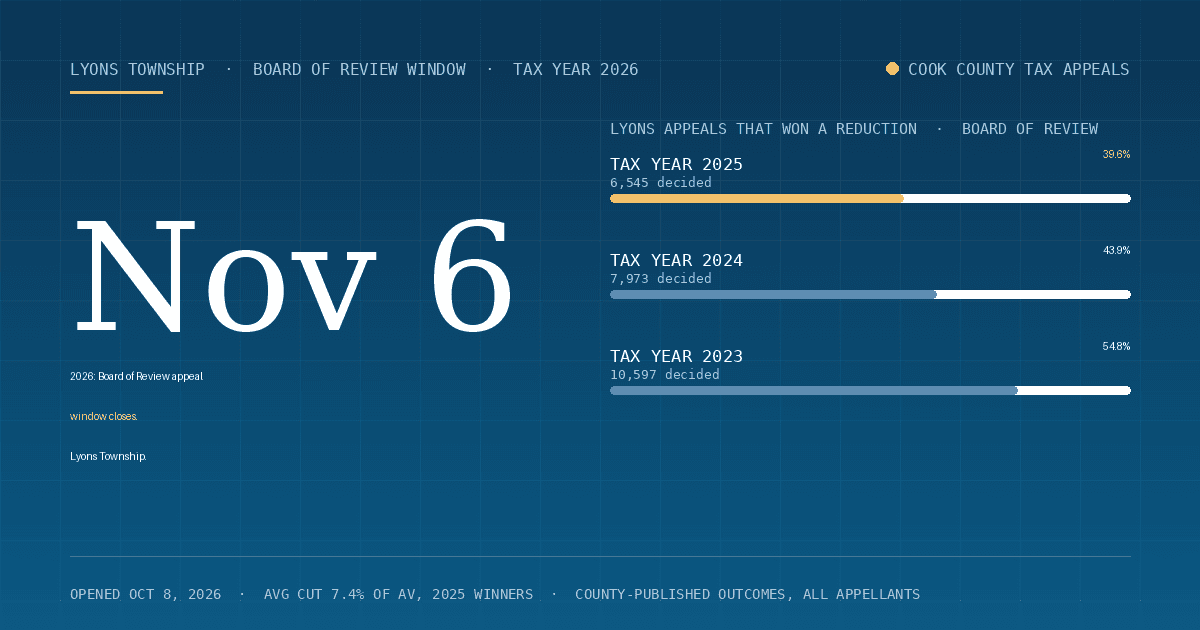
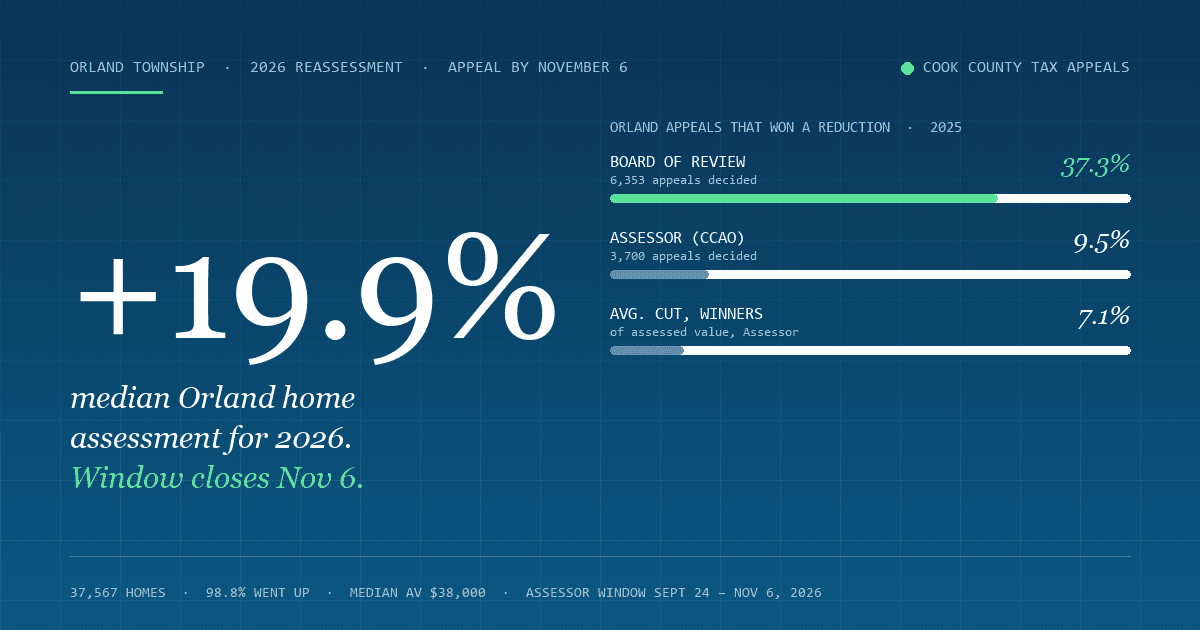
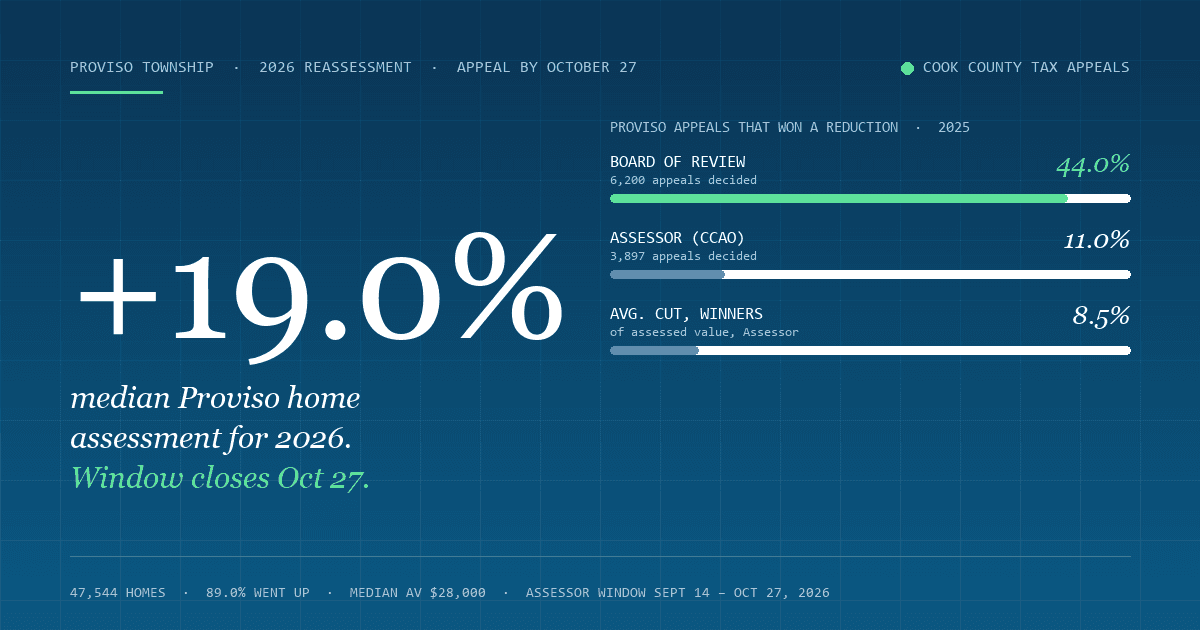
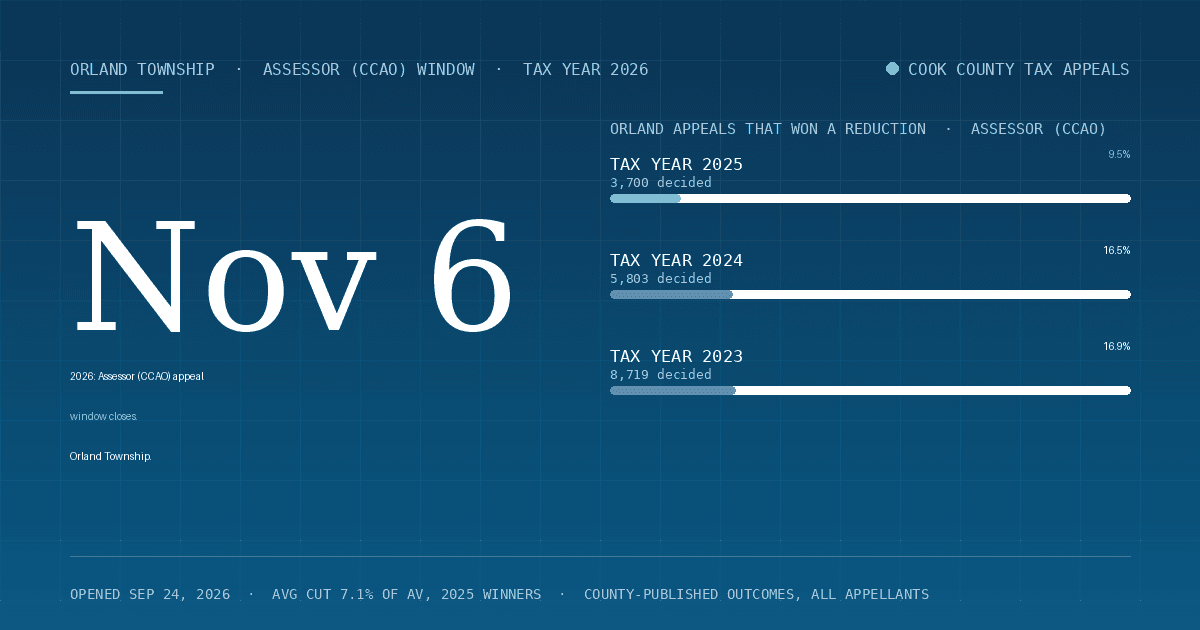
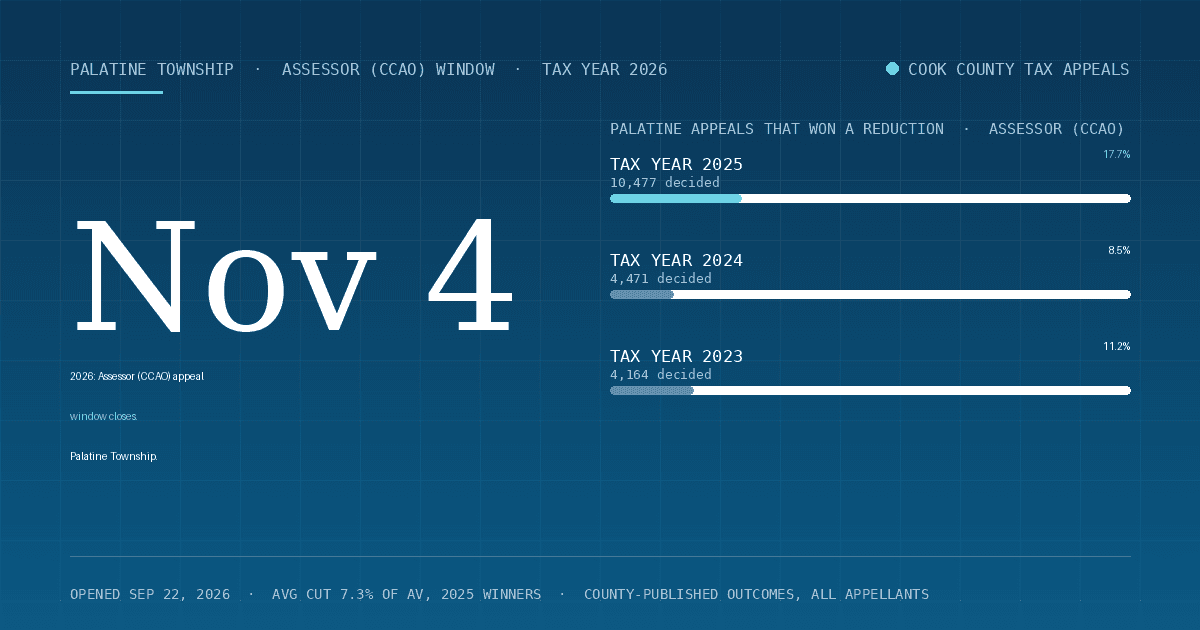
The surtax was pitched largely as a property tax relief vehicle. Whatever happens to it down the road, it doesn't change today's reality: the most direct way to lower your own property tax bill is still to make sure your assessment is correct — and to appeal it if it isn't.
What should Cook County residents do?
A few practical steps for 2026:
- Check your first paychecks of the year for correct withholding.
- Confirm whether your municipality kept a local grocery tax — it tells you whether the "ended" state tax actually saved you anything.
- Track your Illinois online sales against the $100,000 threshold if you run a business.
- Re-check eligibility for Illinois credits if your income has risen.
- Talk to a tax advisor if your income is complex or crosses state lines — the pass-through and apportionment changes are where the real money is.
- Don't overlook your property tax bill — it's usually the largest state-and-local tax a Cook County household pays, and the one you can most directly challenge.
Illinois tax law moves quickly, and Cook County tends to feel the changes first. Getting oriented early in the year helps you avoid surprises and plan with confidence.
Your property tax bill is the one you can fight
Most 2026 changes are out of your hands. Your property assessment isn't. Send us your address or PIN and we'll check whether you're over-assessed — free, no obligation, and no upfront cost to appeal.
Check my assessment →2026 Illinois tax changes FAQ
Did the Illinois income tax rate change in 2026?
No. Illinois still has a flat individual income tax rate of 4.95%, unchanged for 2026. What changed are technical business rules — chiefly how gains on the sale of partnership and S-corporation interests are sourced to Illinois, and combined-reporting apportionment for multi-state groups.
Is the grocery tax really gone in Cook County?
The 1% state grocery tax ended January 1, 2026, but the same law let municipalities and counties impose their own 1% local grocery tax by ordinance. Most Cook County towns and the City of Chicago re-imposed it, so for most shoppers the bill is unchanged. Check your municipality or your receipt to be sure.
What's the new online sales tax rule?
Beginning in 2026, remote sellers and marketplace facilitators must collect Illinois sales tax once they reach $100,000 in sales to Illinois customers over a 12-month period. The previous 200-transaction trigger was removed.
Is there a millionaire tax in Illinois now?
No. A proposed 3% surtax on income over $1 million would require a constitutional amendment approved by voters. The 2026 measure (HJRCA 21) stalled in the House and missed the deadline to appear on the November 2026 ballot, so it is neither law nor a pending ballot question. Supporters may revisit it in a future session.
How do these changes affect my property taxes?
Most of the 2026 changes (income, sales, excise) don't touch your property tax bill directly. Property taxes are driven by your assessment, the local levy, and exemptions. The component you can directly challenge is your assessment — which is what an appeal addresses.
What should a business owner do first?
Total your Illinois online sales against the $100,000 threshold, and if you own a pass-through entity or operate across state lines, review the new sourcing and apportionment rules with a tax professional — ideally before a sale or before year-end.
This article is general information for Cook County residents, not legal, tax, or financial advice. Tax rules change frequently and local rates vary; confirm specifics with the Illinois Department of Revenue, your municipality, or a qualified tax professional. Cook County Tax Appeals focuses on property tax assessment appeals.